Sta. Rita Hills Wineries: The Cool-Climate Guide
This is the coldest corner of Santa Barbara wine country, and the reason its Pinot Noir gets talked about the way it does. Here is how to read it and how to visit.
Short answer
The Sta. Rita Hills is Santa Barbara County's coolest wine appellation, established in 2001 at the fog-swept western end of the Santa Ynez Valley. Its wineries specialize in Burgundian Pinot Noir and Chardonnay, with the estates dispersed along Santa Rosa Road and Highway 246 between Lompoc and Buellton.
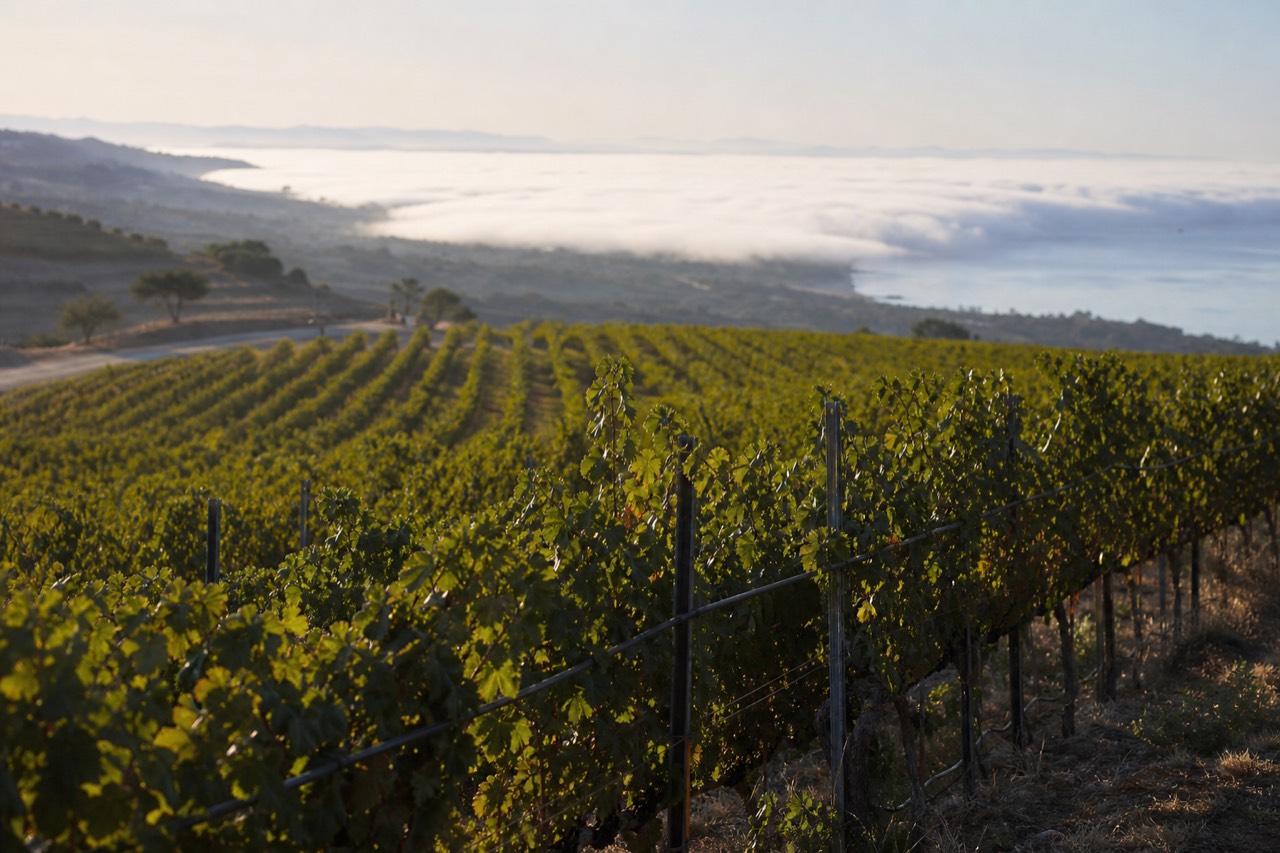
Fog is the whole story here. Pacific marine air pours inland through a gap in the coastal mountains and settles over the western end of the Santa Ynez Valley, holding the temperature down through the growing season in a way the rest of the county cannot match. That cold is deliberate luck of geography, and it is why the Sta. Rita Hills, established as a federal appellation in 2001, has become the address serious drinkers name first when they talk about Santa Barbara Pinot Noir. The grapes ripen slowly, keep their acid, and turn out wines with the tension people cross the country to taste.
The catch is that this is the hardest part of the region to visit casually. The estates are scattered along two rural roads rather than gathered on a walkable street, many take visitors by appointment only, and the appellation itself is the sort of place that rewards planning over wandering. This guide lays out where the wineries actually sit, what to taste when you get there, how the visiting works, and why the cold western end grows what it does, using the primary appellation record and honest, current fee ranges.
What are the Sta. Rita Hills wineries known for?
Sta. Rita Hills wineries are known for cool-climate Pinot Noir and Chardonnay in a tight, Burgundian style. The appellation was established in 2001 and sits at the cold western edge of the Santa Ynez Valley, where ocean fog slows ripening. The result is wine with bright acid and restraint rather than the ripe, high-alcohol profile of warmer California regions.
If Santa Barbara County has a wine calling card, this is it. The two grapes that define the Sta. Rita Hills are the classic Burgundian pair, Pinot Noir and Chardonnay, and the appellation earned its reputation by growing them in a style that reads as elegant rather than heavy. Small producers dominate here, many of them making tiny quantities from specific vineyard blocks, which is why collectors and sommeliers pay attention to the name on the label.
There is a naming quirk worth knowing. The appellation was originally granted as the "Santa Rita Hills" in 2001, then abbreviated to "Sta. Rita Hills" a few years later, effective in 2006, after a trademark question with a large Chilean producer that shares the Santa Rita name. So the odd-looking abbreviation on bottles is not a typo, it is a legal compromise, verified against the seven federal appellations on record with the national tax and trade bureau. The table below sets out the essentials at a glance.
| Detail | The Sta. Rita Hills |
|---|---|
| Established | 2001, abbreviated to "Sta. Rita Hills" in 2006 |
| Where | Cool western end of the Santa Ynez Valley |
| Climate | Coldest in the county, fog-cooled |
| Signature grapes | Pinot Noir, Chardonnay |
| Style | Bright, Burgundian, acid-driven |
| Visiting | Dispersed estates, many appointment-only |
Because this is the specialist end of the county rather than the easy strolling end, it pays to know where it fits in the wider picture before you plan a visit. Our overview of how the county's wineries split by region places all seven appellations in context, and the whole layout is mapped in our Santa Barbara wine country map. First, though, here are the guided days that get you closest to this kind of vineyard country.
Why is the Sta. Rita Hills so cool for a California wine region?
The Sta. Rita Hills is cold because the coastal mountains here run east to west, opening the valley directly to the Pacific. Ocean fog and marine air funnel straight inland and settle over the western hills, dropping temperatures and lengthening the growing season. That long, cool ripening is what gives the appellation's Pinot Noir and Chardonnay their acidity and finesse.
Most California wine regions sit behind mountains that run north to south, which shields the interior from the ocean and lets the heat build. Santa Barbara County breaks that pattern. Its ranges run east to west, an unusual transverse orientation, so the valleys act like open funnels pointed at the sea. Nowhere is that funnel more effective than at the western end, where the Sta. Rita Hills catch the full brunt of the marine influence before it weakens moving inland.
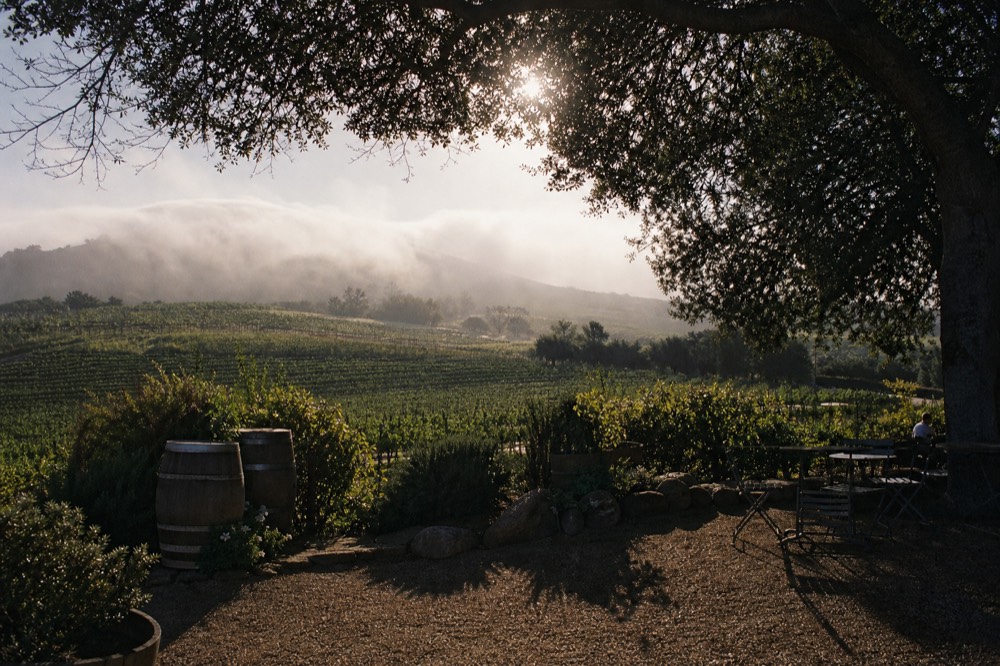
The practical effect is a long, slow season. Fog blankets the vines through summer mornings and often lingers into midday, then the afternoon sun does its work before the cool returns at night. Grapes hang longer to reach ripeness, and the extra hang time builds flavor while the cold preserves the natural acidity that gives the wines their spine. Move east across the county and that fog loses its grip mile by mile, which is why the appellation sits at the cold extreme of a broader gradient. The table below places it against its warmer neighbors.
| Appellation | Position | Climate | Signature grapes |
|---|---|---|---|
| Sta. Rita Hills | Far west | Coldest, fog-cooled | Pinot Noir, Chardonnay |
| Santa Maria Valley | North | Cool | Pinot Noir, Chardonnay, Syrah |
| Ballard Canyon | Central | Warm | Syrah, Rhône reds |
| Happy Canyon | East | Warmest, driest | Cabernet Sauvignon, Sauvignon Blanc |
That gradient is the geological hook behind the whole county, and it explains why a single valley can pour delicate Pinot at one end and full Cabernet at the other. For the fuller version of the varietal story, our post on what this valley is known for traces how the fog shapes the glass. If cool-climate scenery is what pulls you, the vineyard e-bike day is the most direct way to move through it at ground level, and you can check the dates and what it covers on the operator's live listing.
Where is the Sta. Rita Hills, and where do its wineries cluster?
The Sta. Rita Hills sits at the western end of the Santa Ynez Valley, between the towns of Lompoc and Buellton. Its wineries spread along two rural corridors, Santa Rosa Road and Highway 246, with a walkable cluster of small producers gathered in the Lompoc Wine Ghetto, an industrial park near the coast. The estates themselves are dispersed and not walkable.
This is the part that trips visitors up, because the appellation does not have a pretty main street the way Los Olivos or Solvang does. The wineries here are working farms and small production spaces, strung along two roads that run roughly parallel through the hills. Santa Rosa Road threads the southern side, Highway 246 the northern, and estates sit back off both, often at the end of long drives. You do not stroll this appellation. You route it.
The one exception, and the easiest entry point, is the Lompoc Wine Ghetto, a cluster of tasting rooms in a workaday industrial park at the western edge. It is not scenic, but it gathers a batch of serious small producers into one walkable spot, so you can taste several without moving your car. For everything else, you are driving between appointments across open country. The table below sorts the appellation into how you actually reach it.
| Where | What it is | On foot? | Best for |
|---|---|---|---|
| Lompoc Wine Ghetto | Industrial-park tasting cluster | Yes, within the park | Sampling several small producers easily |
| Santa Rosa Road corridor | Dispersed estates, southern side | No, drive between | Estate visits and vineyard views |
| Highway 246 corridor | Dispersed estates, northern side | No, drive between | Reaching named vineyard sites |
| Buellton edge | Town-adjacent rooms | Partly | A base with food and beds nearby |
Because the estates are so spread out, this appellation is where a driver or a private arrangement earns its money more than almost anywhere else in the county. Our guide to reaching the valley from the coast covers the routes in, and if you want the pretty walkable towns instead, the valley's cellar doors town by town points you at Los Olivos and Solvang. The all-inclusive valley day below is the format that folds the driving and the logistics into one price.
If you would rather move through this cool country under your own power than watch it slide past a car window, the vineyard-to-table e-bike day is the standout active option, pairing real tastings with a ride among the rows.
What should you taste in the Sta. Rita Hills?
Taste the Pinot Noir and Chardonnay first, because that pairing is the whole point of the Sta. Rita Hills. The Pinot runs red-fruited, bright and structured, and the Chardonnay leans crisp and mineral rather than buttery. A handful of producers also grow cool-climate Syrah and Grenache, worth trying to see what the fog does to a Rhône grape at the county's cold edge.
If you visit one appellation in the county for the wine itself, this is the one to choose, and the order to taste in almost picks itself. Start with the Chardonnay while your palate is fresh, because the good ones here trade the ripe, oaky California cliche for something tighter and more coastal, all citrus, orchard fruit and a saline lift. Then move to the Pinot Noir, which is the grape that made the appellation's name. Expect red fruit over black, real acidity, and a lighter, more transparent build than warm-climate reds.
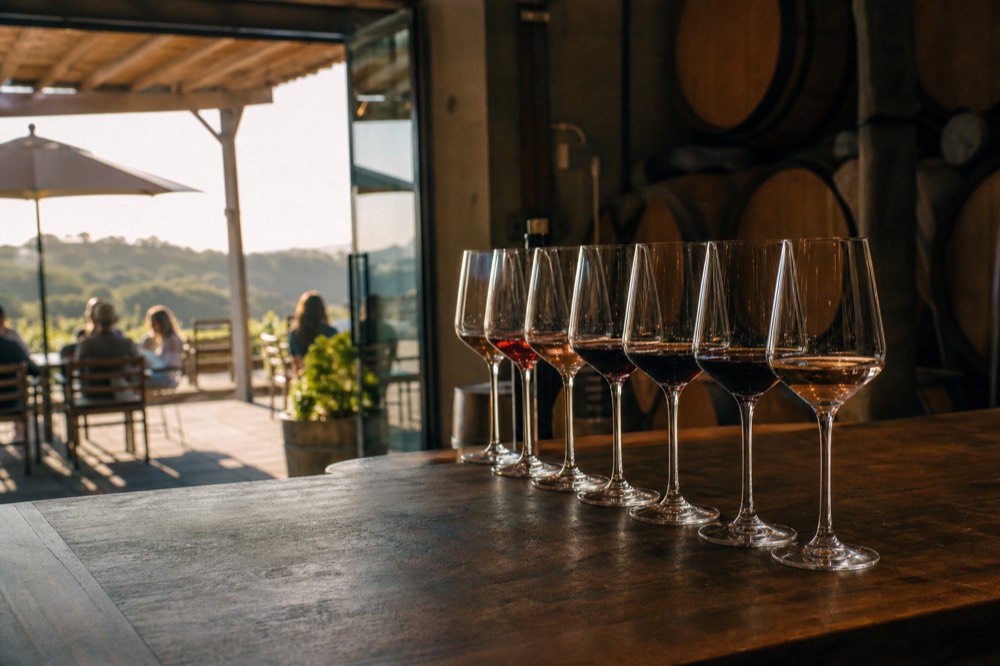
The wildcard worth chasing is the small amount of cool-climate Syrah grown here. Warm regions make Syrah dark and jammy, but at the cold western end it turns savory and peppery, closer to the northern Rhône than to a typical California bottling. Trying one next to the Pinot is a quick lesson in what temperature does to a grape. The table below lays out what to look for and why it tastes the way it does.
| Wine | What to expect | Why it tastes this way |
|---|---|---|
| Chardonnay | Crisp, citrus, mineral, low oak | Long cool ripening keeps acid high |
| Pinot Noir | Red fruit, bright acid, elegant | Fog slows ripening, preserves finesse |
| Cool-climate Syrah | Savory, peppery, restrained | Cold edge tames the grape's power |
| Sparkling (some producers) | Taut, high-acid base wine | Cool sites suit sparkling fruit |
Once you have tasted the county's benchmark cool-climate wines, the contrast with the warmer inland appellations makes more sense, and our roundup of the best wineries to actually visit sets the range side by side. For the scenery that goes with these wines, our blog on the most beautiful wineries in the county includes several western sites where the fog and the rows do the work.
How do you visit Sta. Rita Hills wineries?
Plan ahead, because many Sta. Rita Hills estates are appointment-only. Book seated tastings in advance, especially for groups and on weekends. Standard flights run roughly $20 to $35, with reserve and estate experiences $35 to $50 or more, and the fee is often waived with a bottle purchase. The Lompoc Wine Ghetto is the most walk-in-friendly corner.
This appellation asks more of a visitor than the walkable towns do, and the biggest adjustment is the reservation habit. Many of the estates here are small operations where someone has to be on hand to pour, so they run tastings by appointment rather than keeping a room open all day. Booking ahead is not a formality, it is often the difference between tasting and finding a locked gate at the end of a long drive.
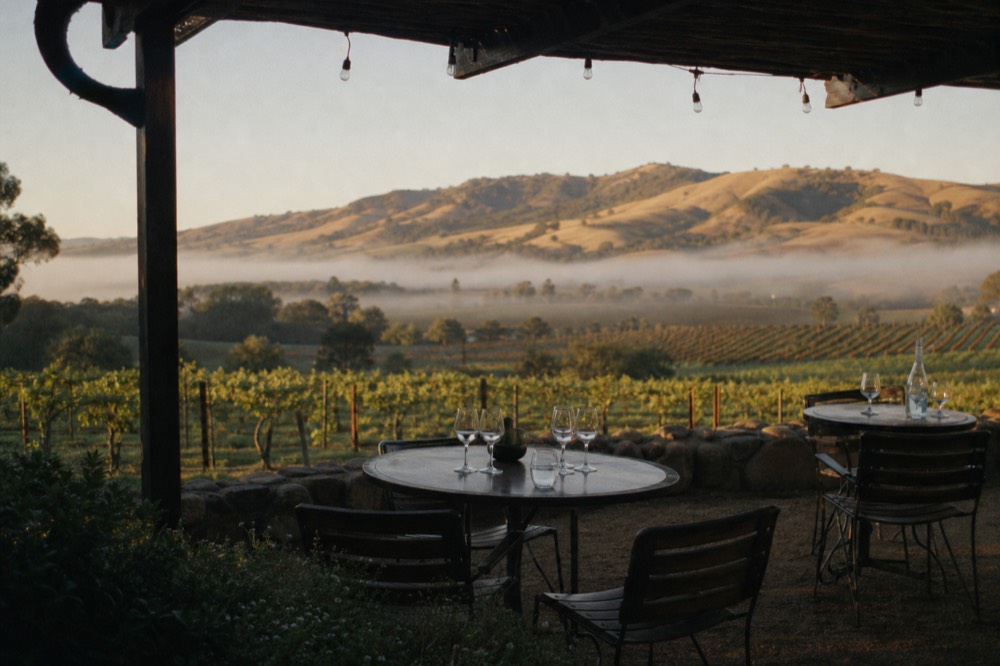
On cost, budget for the tasting fees on top of any tour price, because they are usually paid at the door. A standard flight of four or five wines tends to run in the twenties to mid-thirties, while reserve and library tastings at the estates climb higher, sometimes past fifty. Many rooms credit the fee back if you buy a bottle, which is worth knowing if you plan to take wine home. The Lompoc Wine Ghetto is the exception to the appointment rule, more casual and more forgiving of a walk-in. The table below sorts the practicalities.
| What | The reality here | Plan for |
|---|---|---|
| Reservations | Many estates appointment-only | Book seated tastings ahead |
| Standard flight fee | Roughly $20 to $35 | Cash or card at the door |
| Reserve or estate flight | $35 to $50 or more | A splurge stop, not every room |
| Fee waiver | Often waived with a bottle | Buying takes the sting out |
| Walk-ins | Easiest in the Lompoc Wine Ghetto | A casual first stop |
Reservations are the theme of the whole county now, not just this appellation, and our blog on whether you need to reserve ahead covers the wider picture. Because the estates are so spread out and so booking-dependent, this is where handing the logistics to a tour makes the most sense. The all-inclusive and picnic valley days both arrange seated tastings in advance, and this is how we approach it at Santa Barbara Wine Tours: match you to a day that has already made the calls the estates require.
Should you tour or self-drive the Sta. Rita Hills?
For this appellation, a guided or private day makes even more sense than usual. The estates are dispersed across rural roads, many are appointment-only, and a tasting run is several pours where California's legal limit is 0.08 percent blood alcohol. There is no dedicated Sta. Rita Hills-only tour in this lineup, so most visitors reach it on a private day or fold it into a broader valley tour.
The self-drive case is weakest exactly here, for three reasons that stack up. The wineries are scattered along country roads rather than clustered, so you are covering real distance between stops. Many require a reservation, so a spontaneous route rarely works. And the tastings add up, a flight being four to six pours across three or four estates, against a California driving limit set at 0.08 percent under Vehicle Code section 23152, confirmed against California's 0.08 percent legal limit. Put those together and the appellation almost designs itself around having a driver.
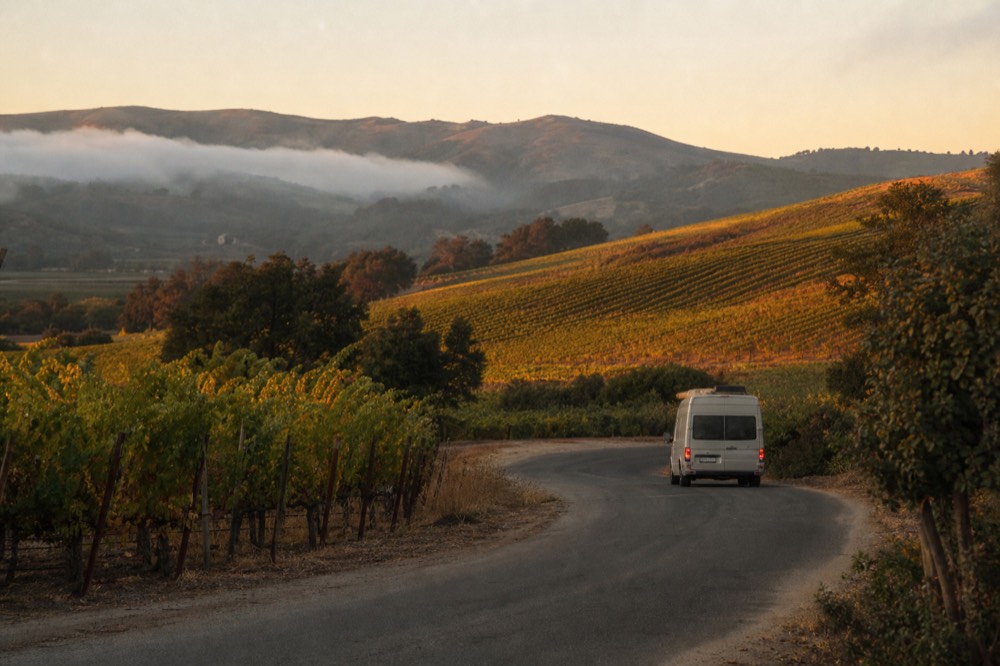
Here is the honest limitation. No currently bookable tour in this lineup runs the Sta. Rita Hills exclusively, and we will not invent one to fill the gap. What exists instead are real options that get you into this kind of country: a private custom day shaped around a western route, a vineyard e-bike experience that moves through the vines under your own power, and the broader valley tours that can touch the appellation's edge as part of a wider day. The table below weighs self-driving against the guided approaches for this specific appellation.
| Consideration | Self-drive | Guided or private day |
|---|---|---|
| Who stays sober | Someone in your party misses out | Everyone tastes |
| Appointment-only estates | You book each one yourself | Arranged in advance |
| Rural driving between stops | You cover it, hunting addresses | Handled for you |
| A dedicated western route | Possible but demanding to plan | Best built as a private day |
| Total ease | Lowest, most planning | Highest, most decided |
If a bespoke western route is what you are after, our comparison of a private tour built around your own list sets out the custom options, and the broader format choices sit in how the valley tour days compare. For most people the easiest honest answer is a private or all-inclusive day that includes some cool-climate stops rather than a self-driven scramble across appointment-only farms.
When is the best time to visit the Sta. Rita Hills?
September through November is ideal, with warm afternoons, cool nights and harvest energy in the rooms. The fog that defines the appellation is heaviest on summer mornings, which can hold the chill late into the day. Winter is quiet and green, spring brings wildflowers, and tastings run year-round, so timing is about mood and light rather than availability.
The cool that makes the wine also shapes the visit. Summer mornings here can sit grey and chilly under the marine layer well past breakfast, which is atmospheric if you like it and a surprise if you expected California sun. Afternoons usually warm as the fog retreats, so a later start suits this appellation better than a dawn one. The most reliable weather comes in the fall, when the mornings clear sooner and the harvest brings the rooms to life.
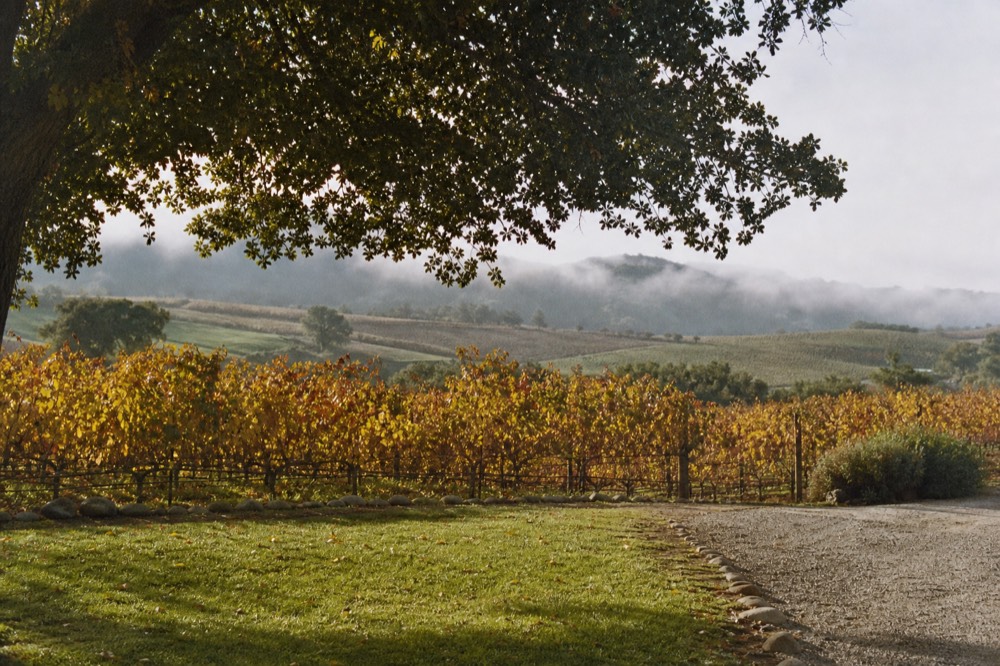
Harvest and crush stretch from late August into October, and at the cool western end the picking often runs later than the warmer appellations because the fruit ripens slowly. That makes early fall a genuine harvest window here. Winter is the quiet, green, wallet-friendly season, and spring greens the hills before the summer fog settles in. The table below sketches the year.
| Season | What it feels like | Crowds | Why go then |
|---|---|---|---|
| September to November | Warm afternoons, harvest buzz, clearer mornings | Busy on weekends | The classic window for this appellation |
| June to August | Grey foggy mornings, warm afternoons | Peak | Long days, the fog effect on show |
| December to February | Cool, green, quiet | Quietest | Lowest prices, unhurried appointments |
| March to May | Mild, green, wildflowers | Building | Shoulder value before summer fog |
If your dates are open, our month-by-month look at which month suits your trip goes deeper on weather and harvest, and for the practical distances involved in reaching this far-western corner, our blog on how far the wineries sit from the city breaks down the drive. Whichever season you pick, the three days below give you a clean spread from an active e-bike experience to a picnic tour and the most-reviewed all-inclusive valley day.
Common questions about the Sta. Rita Hills
What are Sta. Rita Hills wineries known for?
They are known for cool-climate Pinot Noir and Chardonnay in a bright, Burgundian style. The appellation sits at the fog-cooled western end of the Santa Ynez Valley, where a long, cold growing season preserves acidity and finesse. A few producers also grow savory cool-climate Syrah worth seeking out.
Why is it spelled "Sta. Rita Hills"?
The appellation was granted as the "Santa Rita Hills" in 2001, then abbreviated to "Sta. Rita Hills" effective in 2006 after a trademark question with a large Chilean producer that shares the Santa Rita name. The odd abbreviation on bottles is a legal compromise, not a typo.
Where exactly is the Sta. Rita Hills?
It sits at the western end of the Santa Ynez Valley, between Lompoc and Buellton. The wineries spread along Santa Rosa Road and Highway 246, with a walkable cluster of small producers in the Lompoc Wine Ghetto. The estates are dispersed and not walkable, so plan a route.
Do you need reservations for Sta. Rita Hills wineries?
Often, yes. Many estates here are small and appointment-only, so book seated tastings in advance, especially for groups and weekends. The Lompoc Wine Ghetto is the most walk-in-friendly corner. Booking ahead avoids a long drive to a locked gate.
Is there a tour that only visits the Sta. Rita Hills?
Not a dedicated one in this lineup, and we will not invent one. Most visitors reach the appellation on a private custom day shaped around a western route, a vineyard e-bike experience, or a broader valley tour that touches its edge. The estates are dispersed and appointment-heavy, so a guided or private day fits it well.