Santa Barbara Wineries: The County by Region
More than 250 wineries spread across seven federal appellations, split between a walkable coastal city and an inland valley. Here is how the whole county fits together.
Short answer
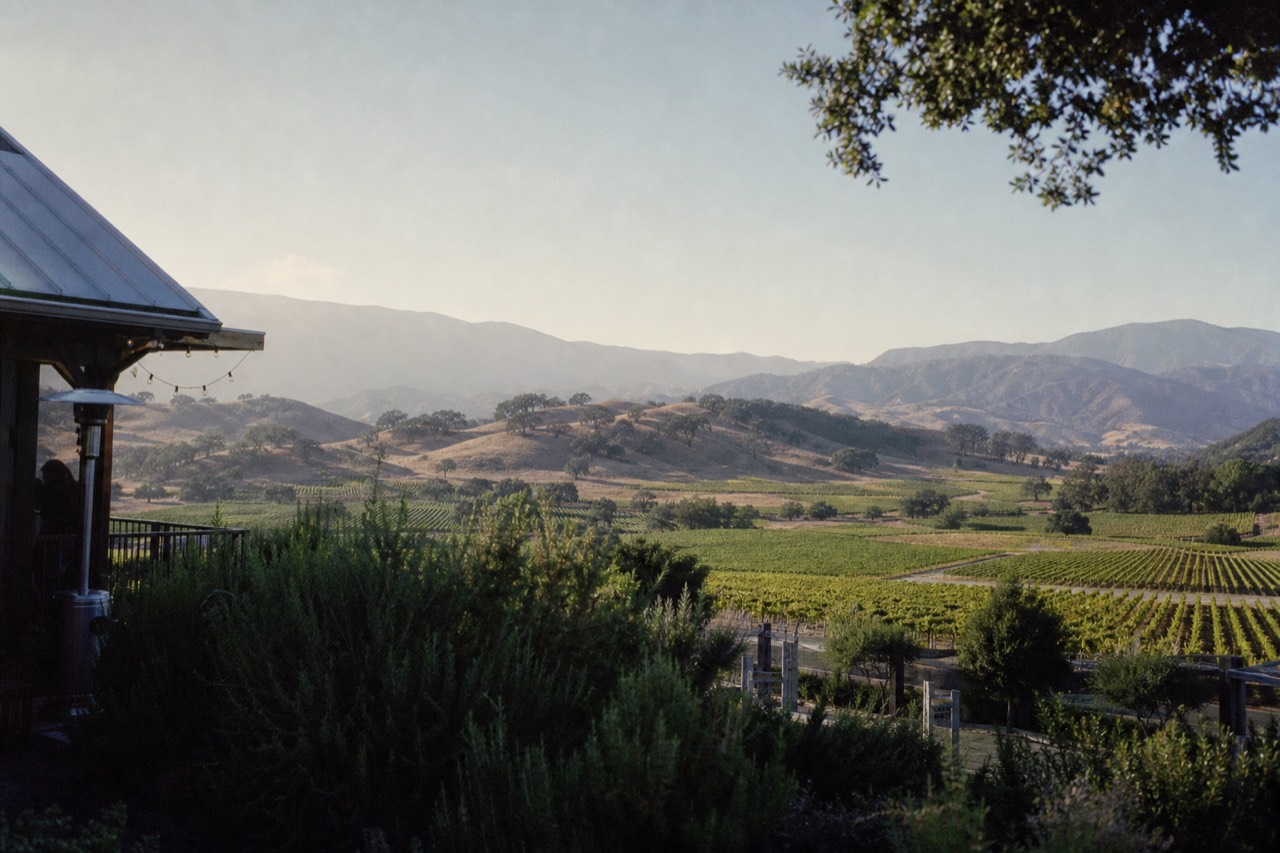
Santa Barbara County holds more than 250 wineries across seven federal appellations, from cool Pinot Noir country by the fog to warm Cabernet ground inland. They cluster in two places: a walkable downtown tasting district near the coast, and the Santa Ynez Valley about forty minutes inland where most of the vines grow.
Wine grapes were worth $87.8 million to Santa Barbara County in 2025, a 24 percent jump in a single year, and that fruit came off a landscape most first-time visitors misread. People picture one wine town. What they get is a county with seven separate federal appellations, a coastal city with its own compact tasting district, and an inland valley forty minutes away where the bulk of the estates actually sit.
That spread is the thing to understand before you plan a day. More than 250 wineries are scattered across ground that runs from fog-cooled Pinot Noir country in the west to hot Cabernet ground in the east, and no single street connects them. This guide lays the whole county out by region, so you can see where the wineries are, what grows where, and how to choose the corner that matches the day you want. Every figure here comes from primary sources and the real operator listings, not a top-ten roundup.
How many wineries are in Santa Barbara County?
Santa Barbara County holds more than 250 wineries, according to the county's vintners association. The vines cover about 11,000 harvested acres, a figure that shifts a little each year. Most of those wineries sit inland in the Santa Ynez Valley, with a smaller cluster of tasting rooms in the coastal city itself.
The number people quote most often runs to more than 250 wineries, drawn from the county's vintners association. Many producers here make wine without owning an estate, buying fruit and renting cellar space, which is common on the Central Coast.
Acreage is where writers often trip up. Published figures report harvested or bearing acres, and those move year to year with weather and demand: roughly 11,168 acres came in during 2023, about 12,126 in 2024, and 10,649 in 2025. There is no separate published "planted" total, so treat the county as around 11,000 harvested acres rather than a fixed number. What matters for a visitor is the ratio: a lot of wineries, spread thin, across a big rural county.
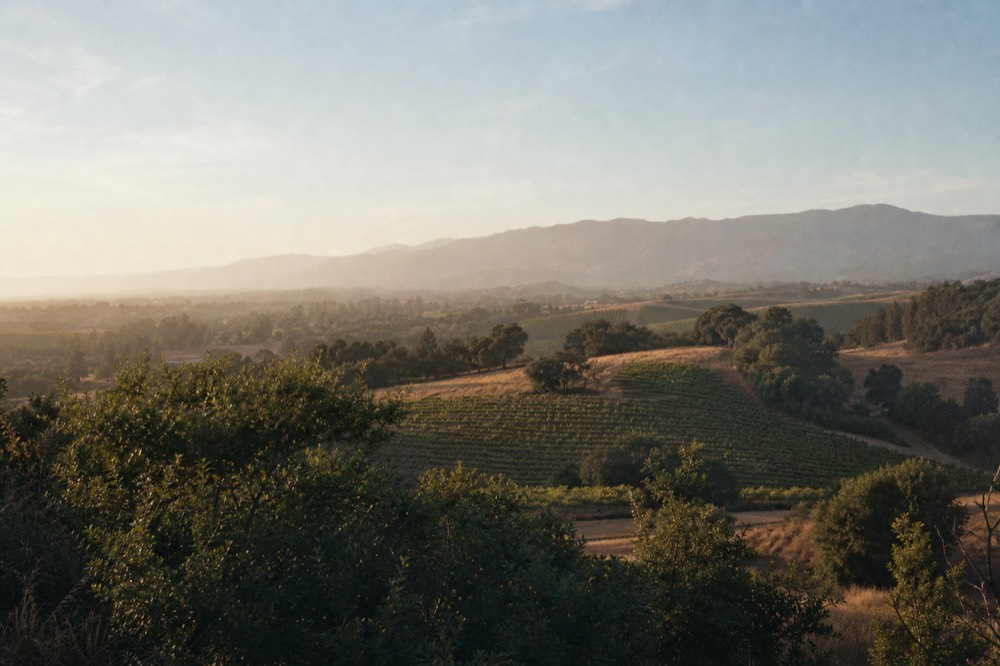
That spread has a practical upshot: no single day can cover the whole county, and trying only leaves you in the car. The better plan is to pick one region and taste it properly, which is what most guided days are built around. A handful of rooms done well beats a dozen half-seen through a windshield.
The lineup below is the set of real, currently bookable winery days this site tracks. If you would rather see the county in a single afternoon than build a route from scratch, start here. The picnic day is the top-rated all-rounder, the firm-price guided day publishes its number up front, and the downtown walk keeps you in the city on foot.
What are the seven AVAs of Santa Barbara County?
Santa Barbara County contains seven federally recognized appellations, one of the deepest stacks in California. In order of establishment they run Santa Maria Valley in 1981, Santa Ynez Valley in 1983, Sta. Rita Hills in 2001, Happy Canyon of Santa Barbara in 2009, Ballard Canyon in 2013, Los Olivos District in 2016, and Alisos Canyon in 2020.
An American Viticultural Area, or AVA, is a boundary the federal government draws around ground with a distinct growing climate. Santa Barbara County has seven of them, and Santa Maria Valley was one of the earliest in the whole country, established in 1981. That depth of appellation is unusual, and it is the reason a county this size can grow such different wines a short drive apart.
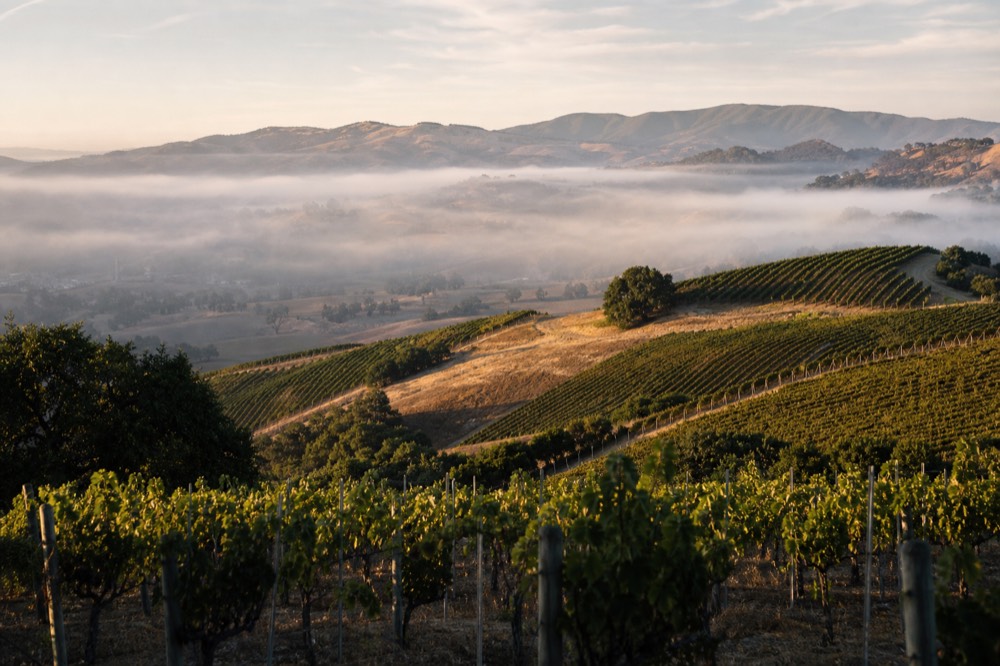
Several of these appellations nest inside the broad Santa Ynez Valley: Sta. Rita Hills, Ballard Canyon, Happy Canyon and the Los Olivos District all sit within or beside it. Santa Maria Valley lies to the north, and Alisos Canyon, the county's newest, was added in 2020. The table below sorts them by date and by what each corner is known for, all cross-checked against the federal record.
| Appellation | Established | Climate | Known for |
|---|---|---|---|
| Santa Maria Valley | 1981 | Cool, coastal | Pinot Noir, Chardonnay, Syrah |
| Santa Ynez Valley | 1983 | Cool to warm, broad | A little of everything |
| Sta. Rita Hills | 2001 | Coolest, fog-swept | Burgundian Pinot Noir and Chardonnay |
| Happy Canyon of Santa Barbara | 2009 | Warmest, easternmost | Bordeaux reds and Sauvignon Blanc |
| Ballard Canyon | 2013 | Warm middle | Syrah and Rhône varieties |
| Los Olivos District | 2016 | Mixed | Rhône and Bordeaux blends |
| Alisos Canyon | 2020 | Warm | Rhône and Bordeaux, the newest AVA |
You do not need to memorize all seven to plan a trip. The useful takeaway is that the county is a gradient, not a single style, and the appellation on a bottle tells you roughly how cool or warm the ground was. The full federal list, with each establishment date, sits with the seven appellations on record. For a closer look at the coolest of them, our guide to the cool-climate Pinot country of Sta. Rita Hills covers that western end in detail.
Are the wineries in the city or the valley?
Both, in two very different settings. The coastal city holds a compact downtown district of around twenty walkable tasting rooms near the waterfront, most in a neighborhood called the Funk Zone. The bulk of the county's estates sit inland in the Santa Ynez Valley, about forty minutes over the mountains, dispersed across ranch roads rather than lined up on one street.
This split trips up more visitors than anything else, so it is worth getting straight early. The city has wine, but almost no vines. What sits downtown is a cluster of tasting rooms, roughly twenty of them, most within a short walk of the harbor and the train station. You can taste there on foot without a car, which no other part of the county offers.
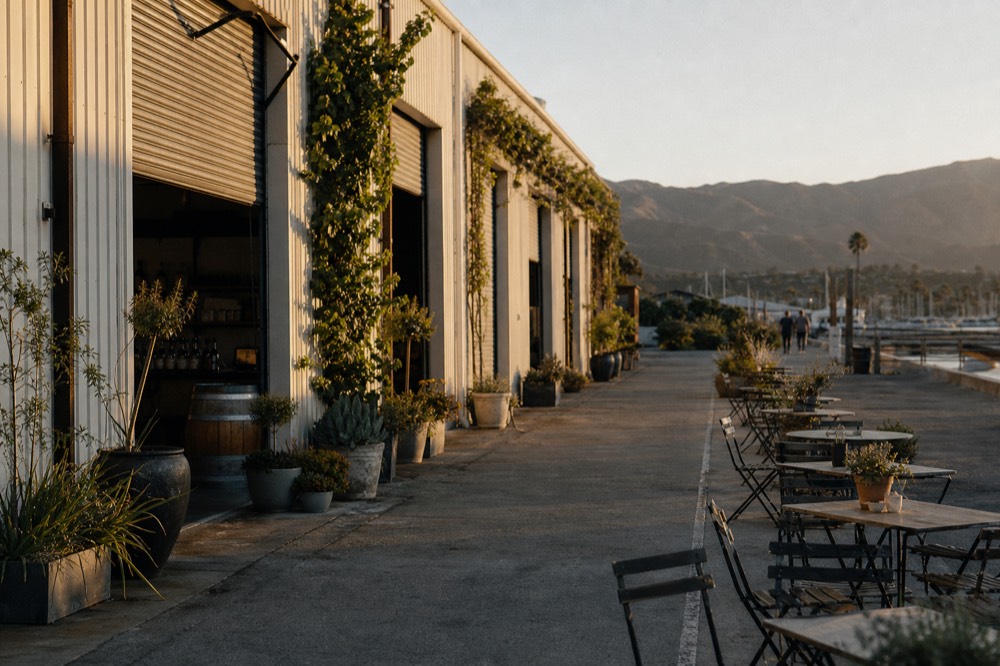
The vines themselves grow inland. The Santa Ynez Valley strings together several small towns, Solvang, Los Olivos, Santa Ynez, Ballard, Los Alamos and Buellton, plus the Lompoc "Wine Ghetto," an industrial-park cluster of tasting rooms near the coolest vineyards. Some of those towns are walkable, but the estates between them are not, which is where a driver or a tour earns its keep. The table below sets the two worlds side by side.
| City tasting district | Santa Ynez Valley | |
|---|---|---|
| What it is | Around 20 downtown tasting rooms | Estates and town rooms across a rural valley |
| Vines on site | Almost none, rooms only | Yes, most of the county's vineyards |
| Getting around | Walkable, near the waterfront | Driving between dispersed estates |
| Car needed | No, inside the district | Yes, or a tour |
| Best for | An afternoon without a car | A full day among the vines |
If a car-free afternoon by the coast is what you want, our guide to the walkable downtown tasting trail maps that district room by room. If you want the vineyards, the valley is where to point yourself, and our breakdown of the valley's wineries town by town covers where each cluster sits.
Which grapes grow where in Santa Barbara County?
Santa Barbara County's mountains run east to west, unusual on the West Coast, which lets Pacific fog pour straight inland and creates a strong cool-to-warm gradient. Sta. Rita Hills at the cool western end grows Burgundian Pinot Noir and Chardonnay; Ballard Canyon in the middle grows Syrah and Rhône reds; Happy Canyon at the hot eastern end grows Bordeaux varieties led by Cabernet Sauvignon.
The geography here does something rare. On most of the West Coast the mountain ranges run north to south, which walls the coast off from the interior. Santa Barbara County's ranges run the other way, east to west, so the valleys open like funnels straight to the ocean. Cold Pacific air and fog pour inland every morning and drain out as the day warms, cooling the western vineyards far more than the eastern ones.
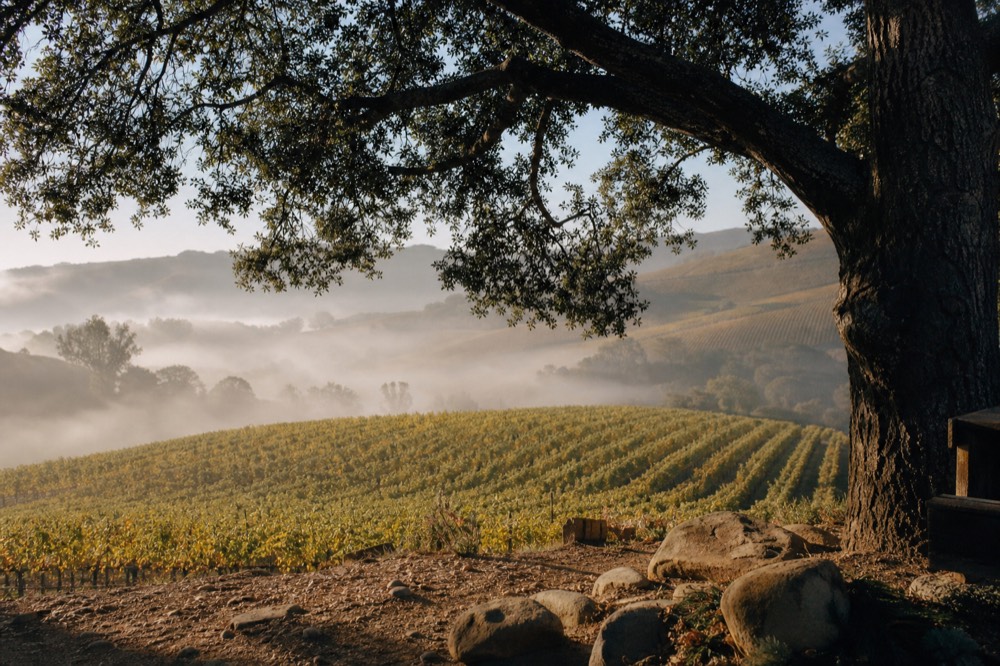
That single quirk explains the whole varietal map. The closer a vineyard sits to the fog, the cooler and longer its growing season, which suits delicate grapes like Pinot Noir and Chardonnay. Push east, out of the fog's reach, and the days get hot enough for thick-skinned Bordeaux reds. One county, one drive, and the grape in your glass changes with the temperature. The table below lines up the main appellations by climate and signature grape.
| Appellation | Where it sits | Climate | Signature grapes |
|---|---|---|---|
| Sta. Rita Hills | Cool west end | Coldest, fog-swept | Pinot Noir, Chardonnay |
| Santa Maria Valley | Northern coastal | Cool | Pinot Noir, Chardonnay, Syrah |
| Ballard Canyon | Central valley | Warm middle | Syrah, Rhône reds |
| Los Olivos District | Central valley | Mixed | Rhône, Bordeaux blends |
| Happy Canyon | Hot east end | Warmest | Cabernet Sauvignon, Sauvignon Blanc |
For most visitors this means one useful decision: chase Pinot Noir and Chardonnay toward the fog in the west, or chase bigger reds inland to the east. Plenty of tours split the difference and cover a couple of climates in one day. If a single grape is pulling you here, our post on what the valley is really known for gets into why its Pinot Noir earned the reputation it has.
How do you choose which Santa Barbara wineries to visit?
Choose by the day you want, not a ranked list. Decide first between the walkable city rooms and the inland valley estates, then pick a climate: fog-cooled Pinot country in the west or warm reds in the east. Match that to how you like to taste, whether that is casual walk-ins in a town or seated tastings at an estate, and let a tour handle any rooms that need a reservation.
The county is too big and too varied to "see it all" in a trip, so the honest first move is to narrow it. Most good winery days here are built around one decision made early: coast or valley, then cool or warm. Once you have picked a corner, the choices get smaller and easier, and you stop trying to cross the whole county in an afternoon.
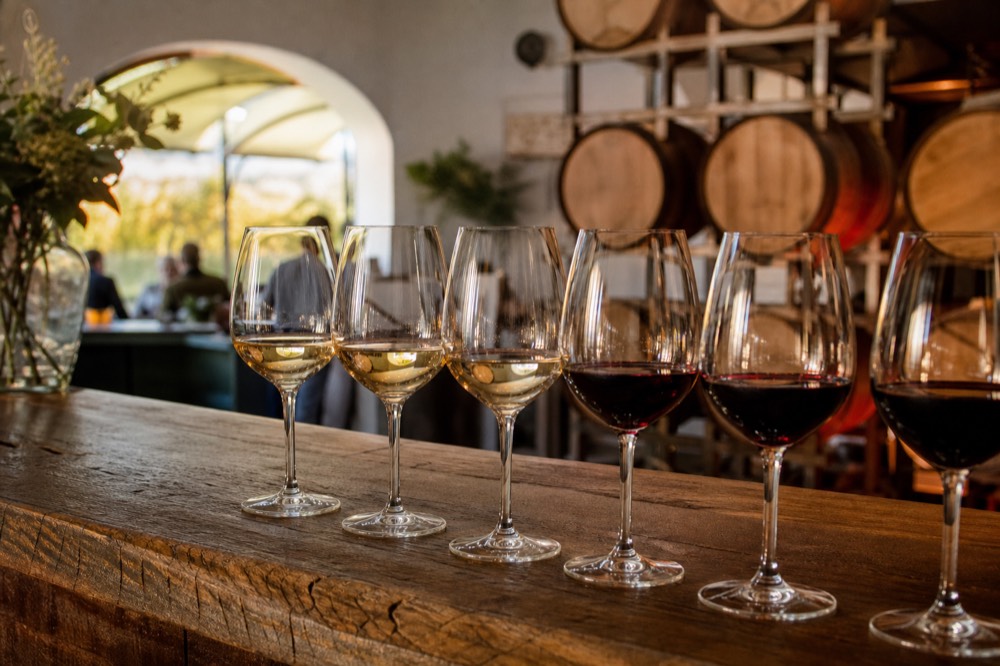
The second decision is how you like to taste. Some visitors want to wander into rooms as they go, with no plan, which the walkable towns and the downtown district both allow. Others want the day arranged, with seated tastings booked and someone else driving between estates. Neither is wrong. The table below sorts the county by what you are in the mood for, so you can jump to the section that fits.
| If you want | Head for | How to do it |
|---|---|---|
| A car-free afternoon | The downtown city district | Walk between around 20 rooms |
| Cool-climate Pinot and Chardonnay | Sta. Rita Hills, western valley | Guided day or a driver |
| Big inland reds | Happy Canyon, Ballard Canyon | Guided day or a driver |
| Casual walk-in tasting | Los Olivos, Solvang, Los Alamos | On foot in the town |
| A curated estate day | Rural Santa Ynez Valley | A tour that books ahead |
Once you know your corner, a guided day stops being a luxury and becomes the practical way to reach the rooms that need a reservation. The most-booked option here is the small-group picnic day that visits three valley wineries with the seated tastings arranged in advance, which is the way we tend to point first-timers at the region here at Santa Barbara Wine Tours. You can check the dates and what it covers on the operator's live listing.
Travelers who want a firm number before they commit tend toward the guided small-group day that publishes its price up front, from $239 per person, run by a long-running local operator across a longer six-to-eight-hour route. If you would rather compare curated best-to-visit picks, our roundup of the wineries worth building a day around lays out the options by what each one does well.
What do wine tastings cost across the county?
A standard tasting flight runs about $20 to $35 in the walkable towns and downtown district, and $35 to $50 or more for reserve or estate experiences. Many rooms waive the fee if you buy a bottle or join the club. On a guided day, budget separately for tasting fees unless the tour includes them, plus $20 to $40 for lunch where it is not packed in.
Tasting fees are the cost most first-timers forget to plan for, and they add up faster than the tour price suggests. In the walkable towns of Los Olivos and Solvang, and in the coastal city district, a standard flight of four or five pours usually lands between $20 and $35. Step up to a reserve flight or a seated estate tasting and the figure climbs to $35, $50 or beyond.
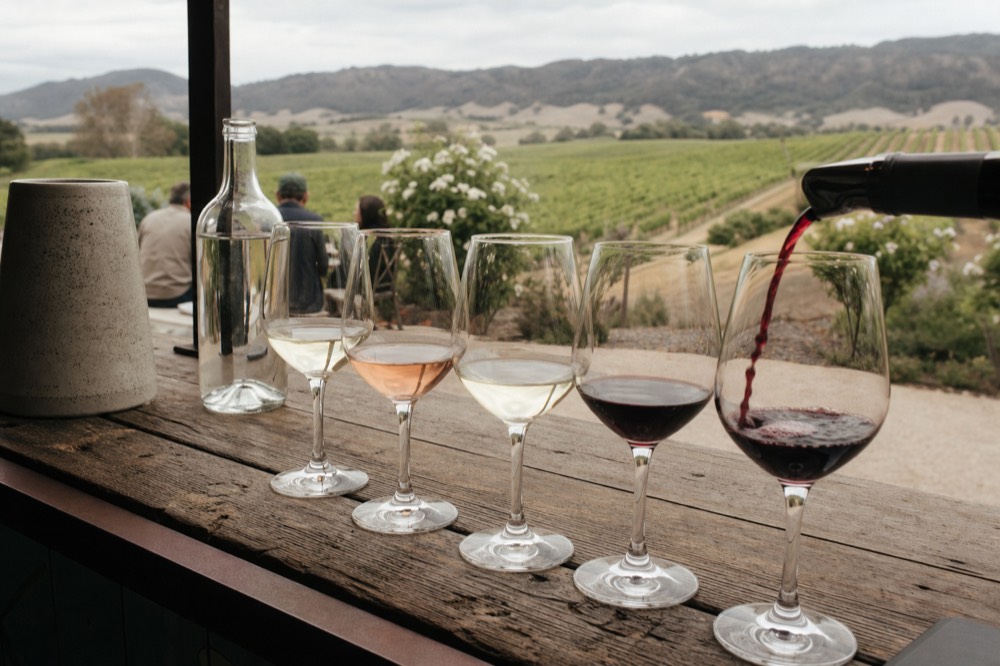
Two things soften the total. Many rooms waive the tasting fee if you buy a bottle or two, or join their club, so a purchase you were going to make anyway can cancel the fee. And an all-inclusive tour folds the fees and lunch into one price, which removes the running tab at each cellar door. The table below sets out the rough numbers so you can budget the real cost of a day, not just the sticker on a tour.
| Cost | Rough range | Notes |
|---|---|---|
| Standard flight, walkable towns | $20 to $35 | Four or five pours, often walk-in |
| Reserve or estate tasting | $35 to $50+ | Seated, sometimes by reservation |
| Fee waiver | Often with a bottle purchase | Thresholds vary by room |
| Lunch | $20 to $40 | Unless the tour packs a picnic |
| All-inclusive tour | One price | Lunch and fees rolled in |
Treat these as planning allowances rather than fixed prices, and check each room, since policies vary. If cost is the main thing shaping your choice, our blog on what a day of tastings really costs walks through the fees room by room and where a tour saves money.
Is it better to take a tour or drive yourself?
For most tasting days a guided tour beats self-driving. A tasting flight is four to six pours across three or four stops, and California's legal limit is 0.08 percent blood alcohol. The county's estates are dispersed and not walkable, and many now take reservations only, so a tour handles the driving, books the rooms and lets everyone in your party actually taste.
This is the honest core of the decision, and it is not scaremongering. California sets the standard driving limit at 0.08 percent under Vehicle Code section 23152, verified against California's 0.08 percent legal limit. A single winery flight is several ounces of wine, and a full day is three or four of them. Across an afternoon that adds up faster than people expect.
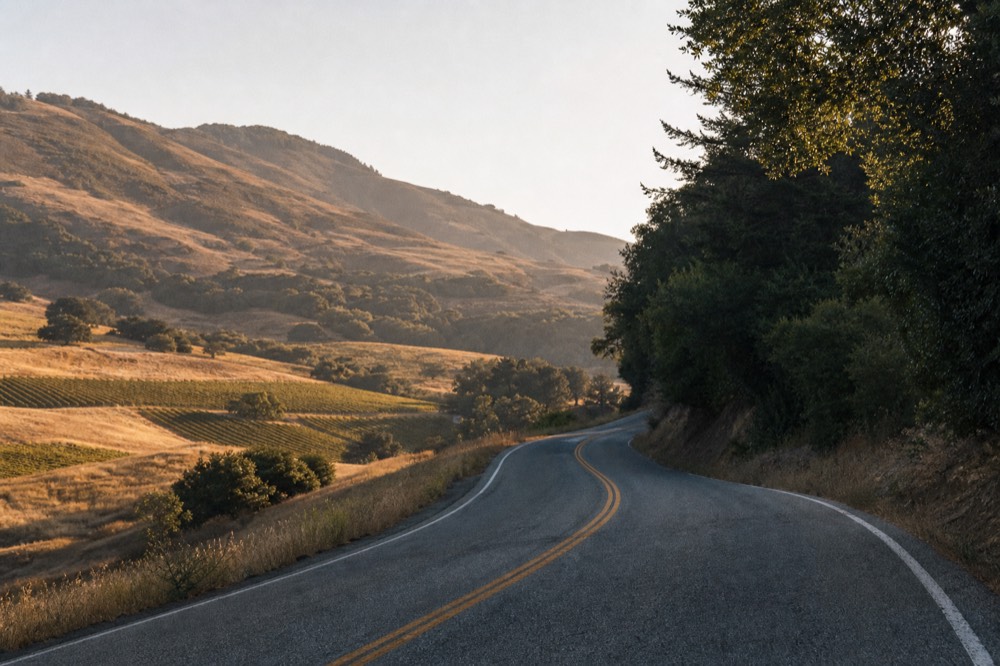
Geography stacks the case higher. In the valley the estates are scattered across ranch roads, so you cannot park once and walk between them the way you can inside a single town, and the drive up from the coast climbs a mountain pass at each end of the day. The table below sets the two approaches next to each other on what actually matters over a tasting day.
| Consideration | Self-drive | Guided tour or shuttle |
|---|---|---|
| Who stays sober | One of your party misses out | Everyone tastes |
| Reservation-only estates | You book each one yourself | Arranged in advance |
| The mountain drive | You drive it, twice | Handled for you |
| Total cost, small group | Fuel, parking, fees, a sober driver | One price, sometimes lunch and fees in |
| Flexibility | Total, if someone abstains | Set route, or full choice on a private tour |
The one honest case for self-driving is a pair where one person genuinely does not drink and is happy to be the driver, sticking to walk-in rooms in a single town. For everyone else the driver problem is the reason these tours exist in the first place. If you are weighing the routes up from the coast, our guide to getting to the wine country from the coast compares the mountain pass against the coastal freeway and covers the door-to-door options.
When is the best time to visit Santa Barbara wineries?
September through November is the sweet spot: warm 70 to 80 degree days, cool evenings and harvest energy in the tasting rooms. Summer draws the biggest crowds, winter is the quietest and cheapest, and spring brings green hills with a chance of coastal morning fog. Wineries and tours run year-round, so timing is about atmosphere and price, not availability.
The county is a year-round destination, which means the calendar is about what kind of day you want rather than whether the doors are open. Harvest and crush stretch from late August into October, and that is when the rooms feel most alive, with fruit coming in and winemakers around. The weather in those fall months tends to be the most settled of the year.
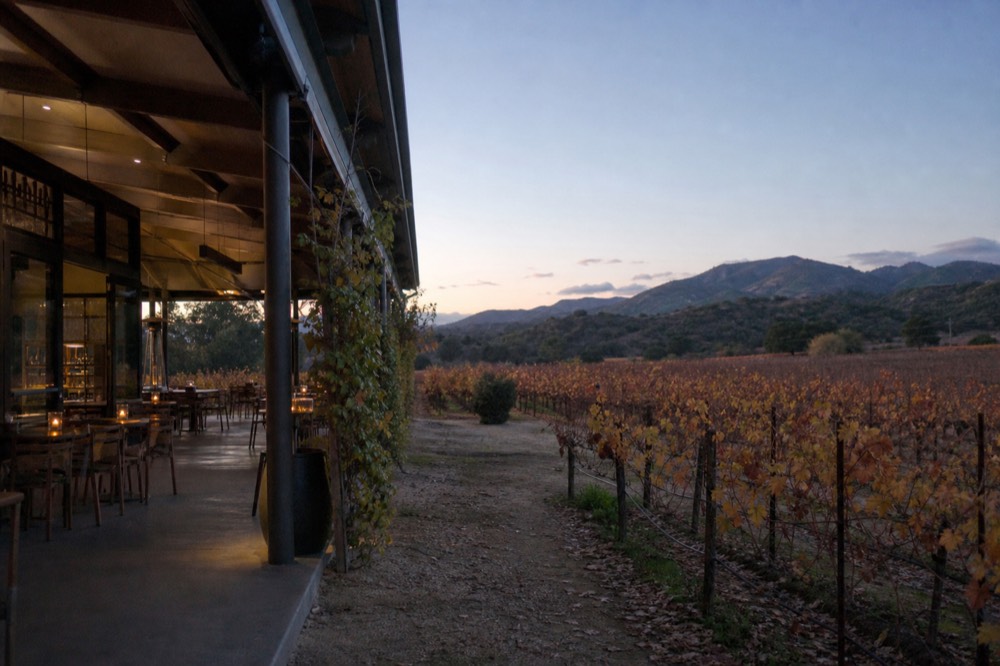
Summer, June through August, is peak tourist season, so book earlier and expect busier rooms. The coast can sit under a morning marine layer that locals call May Gray and June Gloom, though the inland valley usually burns off warmer and drier than the shore. Winter is the quiet, green, wallet-friendly season. The month-by-month view below lays out the trade-offs.
| Season | Weather | Crowds | Why go then |
|---|---|---|---|
| September to November | Warm days, cool nights, harvest color | Busy on event weekends | The classic window: fall light and harvest buzz |
| June to August | Warm inland, coastal morning fog | Peak | Long days, everything open, book ahead |
| December to February | Cool, green, occasional rain | Quietest | Lowest prices, unhurried tasting rooms |
| March to May | Mild, green hills | Building | Wildflowers and shoulder-season value |
If your dates are flexible, our month-by-month look at which month suits your trip goes deeper on weather and events. Whichever window you land on, the three winery days below give you a clean choice between the top-rated valley picnic tour, the firm-price guided day and a car-free downtown walk, so you can hold a date while the weather is still on your side.
Common questions about Santa Barbara wineries
How many wineries are in Santa Barbara County?
The county holds more than 250 wineries, by the vintners association's count. Vines cover about 11,000 harvested acres, a figure that fluctuates each year. Most of the wineries sit inland in the Santa Ynez Valley, with a smaller cluster of tasting rooms in the coastal city itself.
What are the wine regions of Santa Barbara County?
Santa Barbara County has seven federal appellations: Santa Maria Valley, Santa Ynez Valley, Sta. Rita Hills, Happy Canyon of Santa Barbara, Ballard Canyon, Los Olivos District and Alisos Canyon. They run from cool, fog-swept Pinot Noir country in the west to warm Cabernet ground in the east.
Are the wineries in Santa Barbara city or the valley?
Both, in different forms. The coastal city has a walkable downtown district of around twenty tasting rooms near the waterfront, though almost no vines. The vineyards themselves grow inland in the Santa Ynez Valley, about forty minutes over the mountains, where the estates are dispersed and best reached with a driver or a tour.
What wine is Santa Barbara County known for?
Pinot Noir and Chardonnay from the cool western appellations, especially Sta. Rita Hills, are the county's calling card, along with Syrah and Rhône reds from the warmer middle and Bordeaux reds like Cabernet Sauvignon from the hot eastern Happy Canyon. The east-to-west mountains create that cool-to-warm range.
Do you need a tour to visit Santa Barbara wineries?
Not for the walkable city district, where you can taste on foot. For the inland valley a tour or a designated driver makes sense: the estates are dispersed and not walkable, California's limit is 0.08 percent, and many rural rooms now take reservations only, which a tour arranges in advance.
When is the best time to visit Santa Barbara wineries?
September through November is the classic window, with warm days, cool nights and harvest energy in the rooms. Summer is busiest, winter is quietest and cheapest, and spring brings green hills. Wineries and tours run year-round, so timing is about atmosphere and price rather than availability.