Santa Ynez Valley Wineries by Town and AVA
The valley holds most of the county's vineyards, spread across six towns and four sub-appellations. Here is where each cluster sits and what it pours.
Short answer
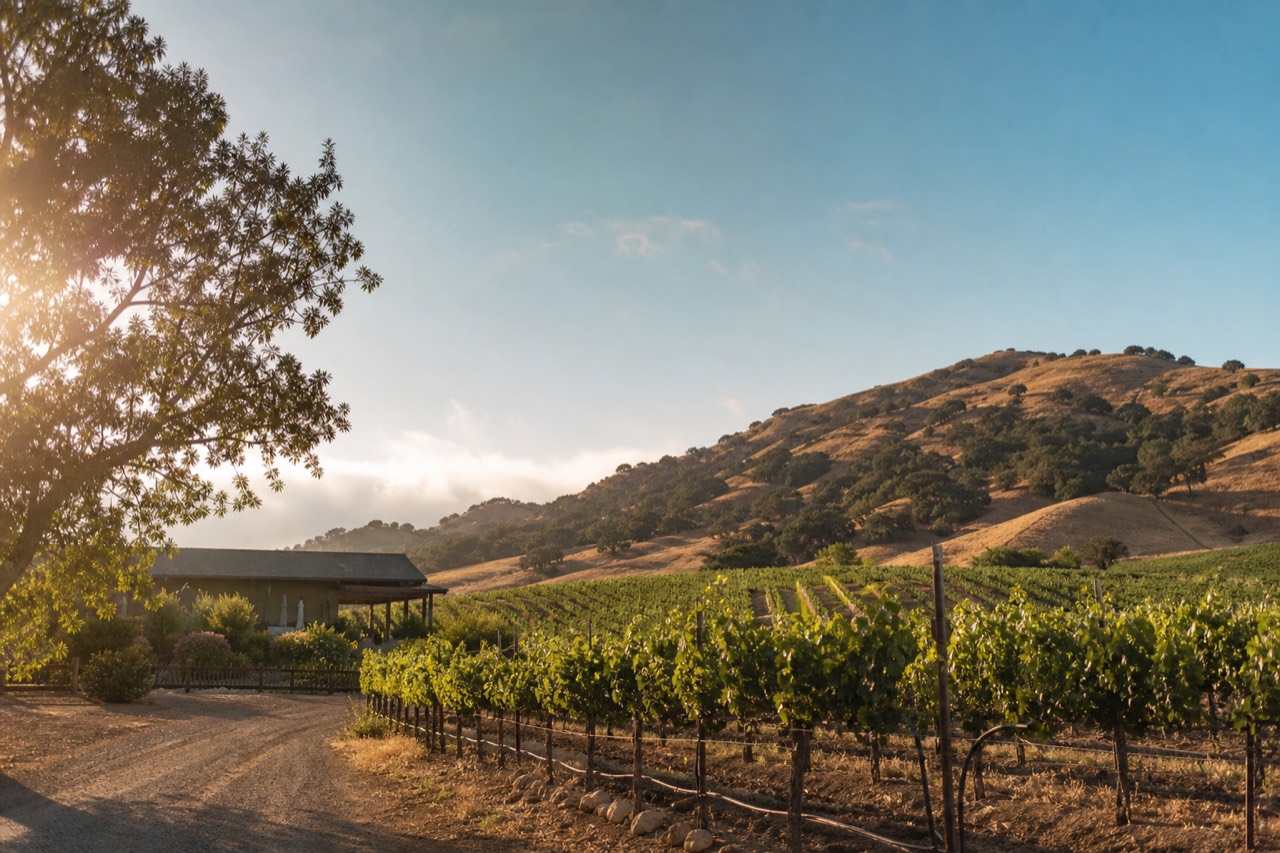
The Santa Ynez Valley holds most of Santa Barbara County's wineries, clustered around six small towns: Solvang, Los Olivos, Santa Ynez, Ballard, Los Alamos and Buellton. Its ground splits into cool Pinot country in the west and warm Rhône and Bordeaux land inland, across four sub-appellations.
Most of Santa Barbara County's more than 250 wineries do not sit in the city named on the map. They sit inland, in the Santa Ynez Valley, about forty minutes over the coastal range, scattered across six small towns and the ranch country between them. That gap between the famous name and the actual vines is the first thing to understand before you plan a day of tasting here.
The valley is not one place with one style. It is a string of towns, each with its own character, laid over ground that shifts from cold Pinot Noir country in the west to hot Cabernet land in the east. Some of those towns you can walk. The estates between them you cannot. This guide maps the valley the practical way, town by town and appellation by appellation, so you know where each cluster of wineries sits, what it pours, and how to reach it. Every figure comes from primary sources and the real operator listings.
How many wineries are in the Santa Ynez Valley?
The Santa Ynez Valley holds the largest share of Santa Barbara County's more than 250 wineries, spread across six towns and four sub-appellations. Exact counts shift as rooms open and close, but the valley is comfortably the densest wine ground in the county, far outweighing the coastal city's walkable tasting district in vineyard acres and estates.
There is no single tidy figure for "wineries in the valley," because producers open and close tasting rooms constantly and the county reports its totals as one number. What the sources do make clear is the balance: of the county's more than 250 wineries counted by the county's vintners association, the great majority of the actual vineyards sit inland in and around the Santa Ynez Valley, not on the coast.
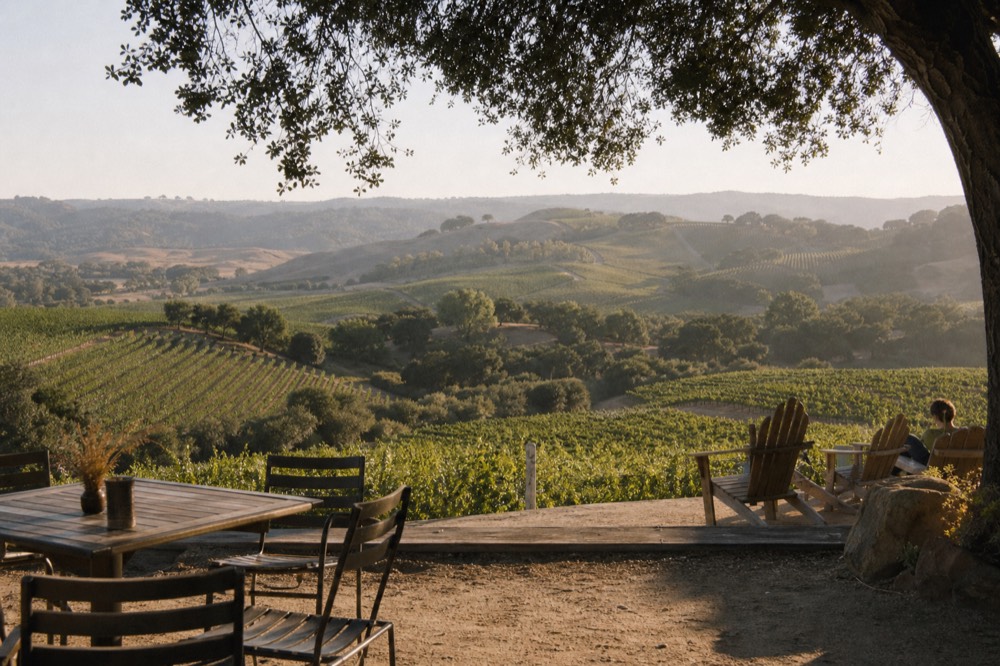
The county's roughly 11,000 harvested acres, a total that moves each year, are concentrated here for a reason: this is where the growing climate works. So while the coastal city gives you around twenty tasting rooms on foot, the valley gives you the vines, the estates, and the range. The trade-off is that you cannot cross it without a car or a driver.
The lineup below is the set of real, currently bookable valley days this site tracks. If you would rather taste widely than build a route yourself, start here. The all-inclusive day carries the deepest review history, the picnic day is the top-rated all-rounder, and the shuttle is the budget way to solve the driving.
Which towns hold the Santa Ynez Valley's wineries?
The valley's wineries cluster around six towns. Solvang is the Danish-themed base with beds and a growing set of rooms; Los Olivos is the walkable tasting-room village; Santa Ynez and Ballard are small and rural; Los Alamos is a short characterful strip up the valley; and Buellton is the roadhouse town the film Sideways made famous. A separate cluster sits in the Lompoc "Wine Ghetto" near the coolest vineyards.
Think of the valley as a handful of small towns with open ranch country between them. Each town has a distinct feel, and where you base yourself shapes the day. Solvang has the most beds and restaurants and works as a hub. Los Olivos is the one people picture when they imagine strolling from room to room, a compact grid you can cross on foot.
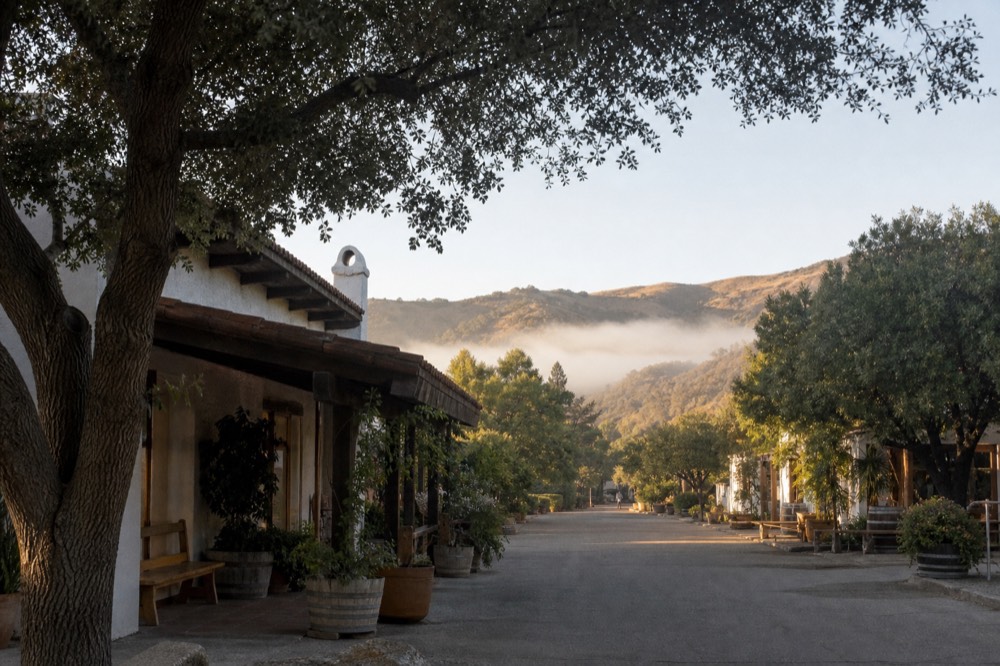
The smaller towns reward a slower pace. Santa Ynez and Ballard are rural and low-key, more about the estates around them than a walkable strip. Los Alamos, up the valley, has become a quietly stylish stop. Buellton, on the freeway, holds the steakhouse that anchored Sideways. And out west near Lompoc, the Wine Ghetto packs a set of unpretentious rooms into an industrial park close to the cool Sta. Rita Hills fruit. The table below sorts the towns by character and how walkable each one is.
| Town | Character | Known for | Walkable? |
|---|---|---|---|
| Solvang | Danish-themed, most beds | A base with a growing wine scene | Yes |
| Los Olivos | Compact tasting-room village | Strolling room to room | Yes |
| Santa Ynez | Small, rural | Nearby estates, quiet | Partly |
| Ballard | Tiny, rural | Ranch-road estates | No |
| Los Alamos | Short stylish strip | Low-key, characterful rooms | Yes |
| Buellton | Freeway town | Sideways history, roadhouse | Partly |
If Solvang is your likely base, our wine-first guide to tasting your way around Solvang covers its rooms without the theme-park gloss, and for the walkable village our look at the tasting rooms of Los Olivos maps that grid in detail.
What are the sub-appellations of the Santa Ynez Valley?
The broad Santa Ynez Valley appellation, established in 1983, contains several nested sub-appellations: Sta. Rita Hills at the cool western end for Pinot Noir and Chardonnay, Ballard Canyon in the warm middle for Syrah, Happy Canyon at the hot eastern end for Bordeaux reds, and the Los Olivos District through the center for mixed blends.
The valley is one tourism zone but several growing climates, and the federal government draws boundaries around the distinct ones. Understanding those lines helps you predict what a room will pour before you walk in. The parent Santa Ynez Valley appellation dates to 1983, and the more specific sub-appellations were carved out later as growers proved each area's character.
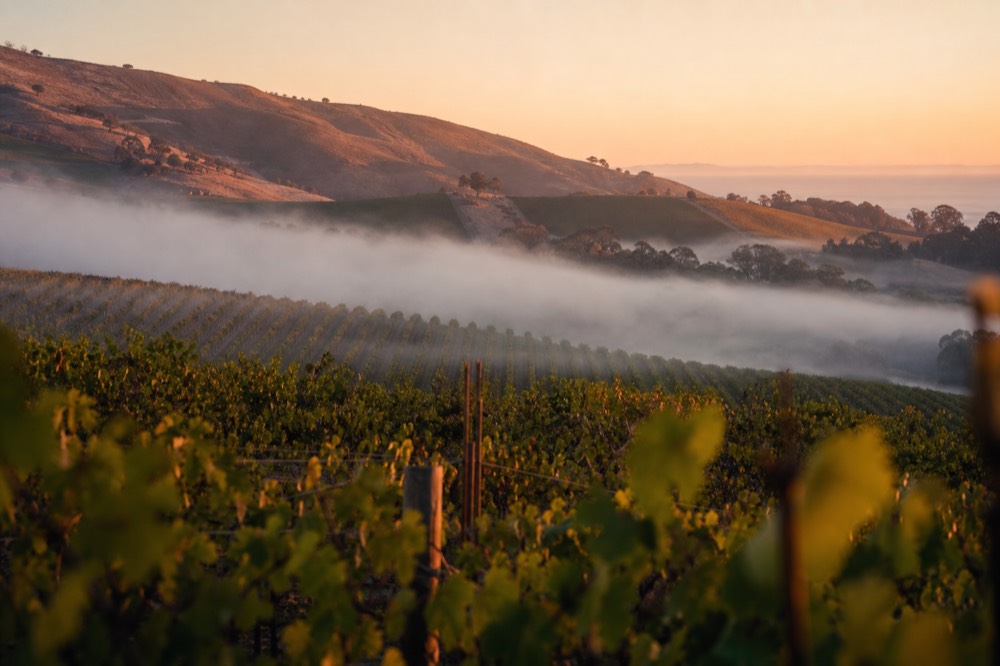
The engine behind all of it is the valley's orientation. The coastal mountains here run east to west rather than north to south, so Pacific fog funnels straight inland and cools the western end far more than the eastern. That gradient is why one valley can grow both delicate Pinot Noir and muscular Cabernet a short drive apart, a pattern confirmed in the appellation petitions on file with the federal appellations on record. The table below sorts the sub-appellations by climate and signature grape.
| Sub-appellation | Established | Climate | Signature grapes |
|---|---|---|---|
| Sta. Rita Hills | 2001 | Coolest, fog-swept west | Pinot Noir, Chardonnay |
| Ballard Canyon | 2013 | Warm middle | Syrah, Rhône reds |
| Los Olivos District | 2016 | Mixed center | Rhône and Bordeaux blends |
| Happy Canyon of Santa Barbara | 2009 | Warmest east end | Cabernet Sauvignon, Sauvignon Blanc |
For a visitor this turns into a simple choice: chase cool-climate whites and Pinot toward the fog in the west, or chase big reds inland to the east. Our guide to the cool-climate Pinot country of Sta. Rita Hills goes deep on that western end, and the wider county picture, including the appellations beyond the valley, sits in our overview of how the county's wineries break down by region.
Which grapes is the Santa Ynez Valley known for?
The valley is best known for cool-climate Pinot Noir and Chardonnay from its western Sta. Rita Hills, Rhône varieties led by Syrah from Ballard Canyon in the middle, and Bordeaux reds like Cabernet Sauvignon from warm Happy Canyon in the east. That range, from Burgundian to Rhône to Bordeaux, is unusual to find in one valley.
Few wine valleys this size grow across so many climates, and it is the valley's calling card. The western ground, cooled by fog, ripens grapes slowly and holds their acidity, which is exactly what Pinot Noir and Chardonnay want. That western fruit is what built the region's reputation and what the film Sideways latched onto twenty years ago.
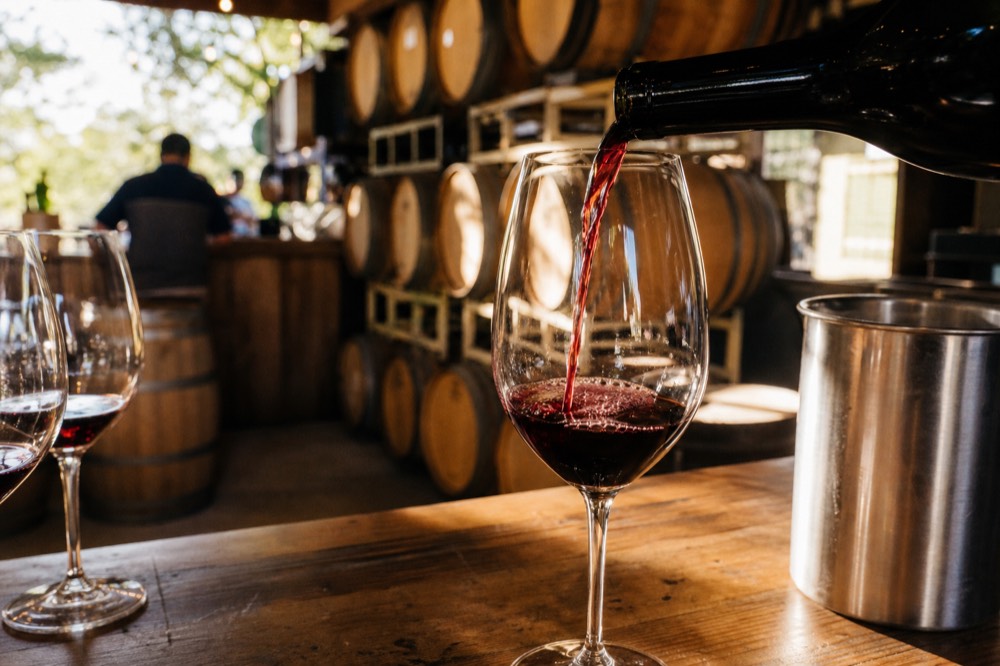
Move inland and the wines get bigger. Ballard Canyon has become the county's Rhône heart, turning out serious Syrah, while the hot eastern pocket of Happy Canyon ripens Bordeaux reds that would struggle by the fog. In between, the Los Olivos District pours a bit of everything, which is why a day there can swing from a crisp white to a dense red without leaving town. The table below matches grape to ground.
| Grape or style | Where it thrives | Why |
|---|---|---|
| Pinot Noir | Sta. Rita Hills, western valley | Fog and cool days hold acidity |
| Chardonnay | Sta. Rita Hills, Santa Maria side | Long, cool growing season |
| Syrah and Rhône reds | Ballard Canyon | Warm middle suits Rhône varieties |
| Cabernet Sauvignon | Happy Canyon | Hot east end ripens Bordeaux reds |
| Sauvignon Blanc | Happy Canyon | Warm ground, crisp white style |
If you want to understand why the valley's Pinot Noir carries the reputation it does, our post on what this valley is really known for gets into the history and the grapes. And if a tour is how you plan to taste across a couple of these climates in one day, our comparison of how the valley's tour days stack up lays the formats side by side.
Which Santa Ynez Valley wineries can you walk to?
You can walk between tasting rooms in Los Olivos, Solvang, Los Alamos and the Lompoc Wine Ghetto, where rooms cluster in compact strips. The rural estates between the towns are dispersed across ranch roads and are not walkable, and many now take reservations only, which is where a designated driver or a guided tour becomes the practical answer.
This is the split that decides how you plan a day. The walkable towns let a car-free visitor wander in and out of rooms with no itinerary, buying tastings as they go. Los Olivos is the standout, a small grid where you can cover several rooms on foot in an afternoon, and Solvang and Los Alamos work similarly on a smaller scale.
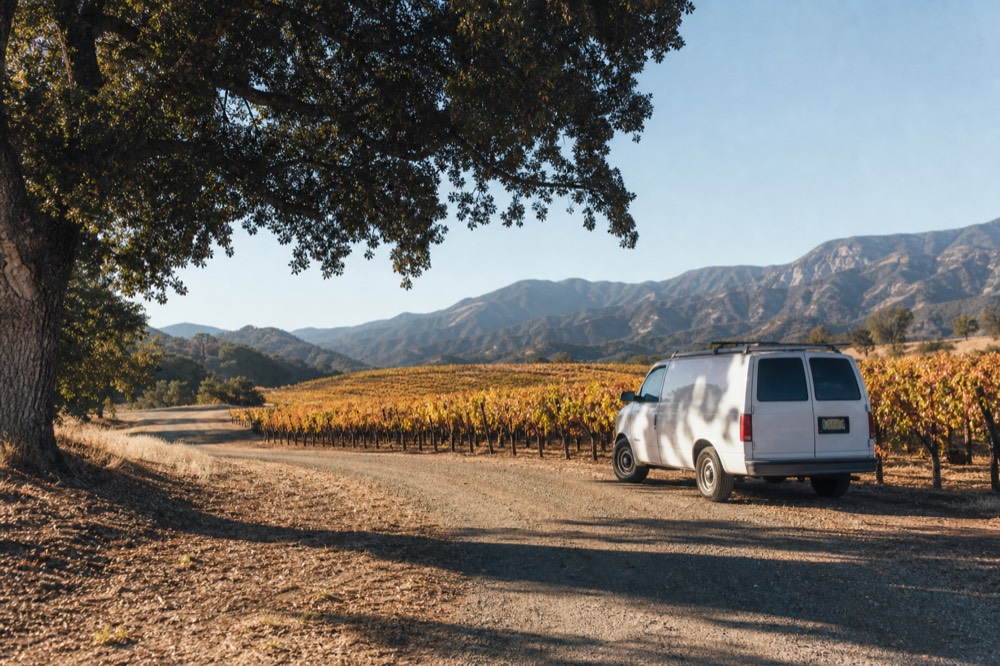
The estates are a different matter. The wineries that sit out among the vines, the ones with the views people come for, are spread across ranch roads with real distance between them, and the trend has moved toward booked, seated tastings rather than casual walk-ins. You cannot string those together on foot, and self-driving between them runs straight into the tasting-and-driving problem. The table below sorts the valley by how you get around.
| Where | Getting around | Tasting style |
|---|---|---|
| Los Olivos | Walkable grid | Mostly walk-in rooms |
| Solvang | Walkable center | Walk-in, some seated |
| Los Alamos | Short walkable strip | Casual rooms |
| Lompoc Wine Ghetto | Walkable industrial park | Unpretentious, walk-in |
| Rural estates | Driving only | Often reservation-only |
The cheapest way to solve the driving without booking a full-day tour is a shared shuttle up from the city, from $139 per person, which handles transport and lets you pay each tasting at the door. It trades the arranged, seated feel of the full tours for a lower entry price and a rolling group, and it is the budget answer for anyone staying on the coast without a car.
Do you need a tour, or can you self-drive the valley?
For a full tasting day a tour usually wins. A flight is four to six pours across three or four rooms, California's legal limit is 0.08 percent blood alcohol, and the valley estates are dispersed and not walkable. A tour handles the mountain drive, books the reservation-only estates, and keeps everyone in your party tasting rather than picking a sober driver.
The honest case for a tour here rests on two facts, one legal and one geographic. California sets the standard driving limit at 0.08 percent under Vehicle Code section 23152, verified against California's 0.08 percent legal limit. A valley tasting day is several ounces of wine across a handful of stops, which adds up quicker than most visitors plan for.
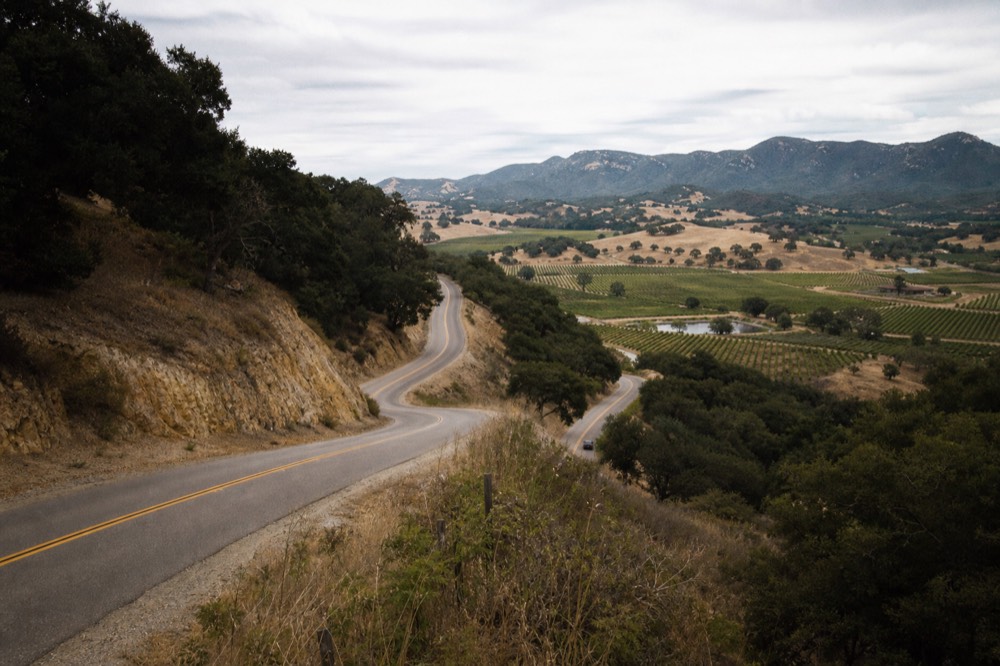
The geography does the rest. Because the estates are scattered and increasingly reservation-only, a tour is often the only way to reach the best rooms at all, and it removes the mountain drive at each end of the day. That is the way we tend to frame it here at Santa Barbara Wine Tours: point you at the real day that gets you among the vines rather than a self-drive that leaves someone stuck behind the wheel. The one exception is a couple where one person does not drink and is happy to drive walk-in rooms in a single town.
The drive up is part of the calculation, so it helps to know the real distances before you decide. The valley sits about forty minutes inland, and the towns within it are only minutes apart once you arrive, which is why the wasted time on a self-drive is the mountain crossing at each end rather than the local roads. The table below lays out the main routes.
| Route | Distance | Time | Via |
|---|---|---|---|
| Santa Barbara to Los Olivos | About 35 miles | 45 to 50 minutes | Highway 154, San Marcos Pass |
| Santa Barbara to Solvang | About 34 miles | 45 to 50 minutes | Highway 154 or coastal 101 |
| Los Angeles to the valley | About 129 miles | Around 2 hours | Highway 101 |
| Between valley towns | A few miles | Minutes apart | Local valley roads |
If you want the routes up from the coast compared, our guide to getting to the wine country from the coast weighs the scenic mountain pass against the coastal freeway loop and the door-to-door tours.
What do tastings cost in the Santa Ynez Valley?
A standard flight in the valley's walkable towns runs about $20 to $35 for four or five pours, while seated reserve or estate tastings run $35 to $50 or more. Many rooms waive the fee with a bottle purchase. On a guided day, budget separately for tasting fees unless the tour includes them, plus $20 to $40 for lunch where it is not packed in.
Fees are the cost people forget when they compare tour prices, and they change the real total for a day. In Los Olivos and Solvang, where walk-ins are still common, a standard flight usually sits between $20 and $35. The rural estates, with their seated tastings and longer pours, run higher, often $35 to $50 and up, especially for reserve or library flights.
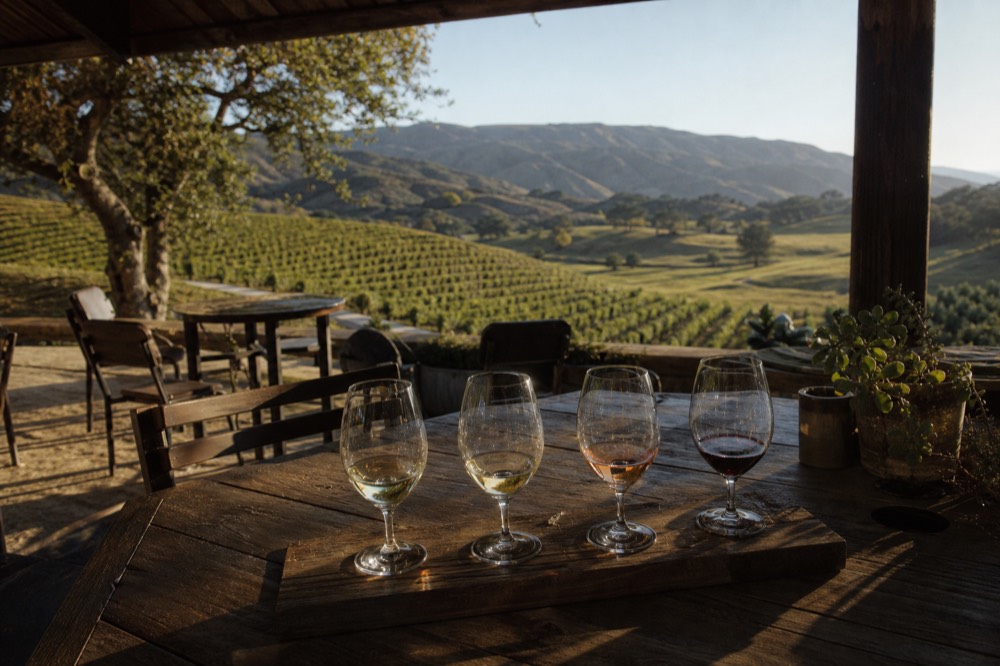
Two things bring the number down. Many rooms waive the tasting fee if you buy a bottle or join the club, so a purchase you planned anyway can erase the fee. And an all-inclusive tour folds the fees and lunch into one price, which is why it can work out cheaper than it looks once you add several cellar-door charges to a bare shuttle. The table below sets out the rough figures as planning allowances.
| Cost | Rough range | Notes |
|---|---|---|
| Standard flight, walkable towns | $20 to $35 | Four or five pours, often walk-in |
| Reserve or estate tasting | $35 to $50+ | Seated, often by reservation |
| Fee waiver | Often with a bottle purchase | Thresholds vary by room |
| Lunch | $20 to $40 | Unless the tour packs a picnic |
| All-inclusive tour | One price | Lunch and fees rolled in |
Treat these as allowances rather than fixed prices, and confirm at each room. If cost is what is driving your choice, our blog on what a day of tastings really costs breaks the fees down room by room.
When is the best time to visit the valley's wineries?
September through November is the sweet spot: warm 70 to 80 degree days, cool evenings and harvest energy in the rooms. Summer draws the biggest crowds, winter is the quietest and cheapest, and spring brings green hills. The inland valley usually runs warmer and drier than the foggy coast, and wineries and tours operate year-round.
Timing here is about atmosphere and price rather than whether the doors are open. Harvest and crush run from late August into October, and the rooms feel most alive then, with fruit coming in and winemakers around. Those fall months also bring the most settled weather of the year to the inland valley.
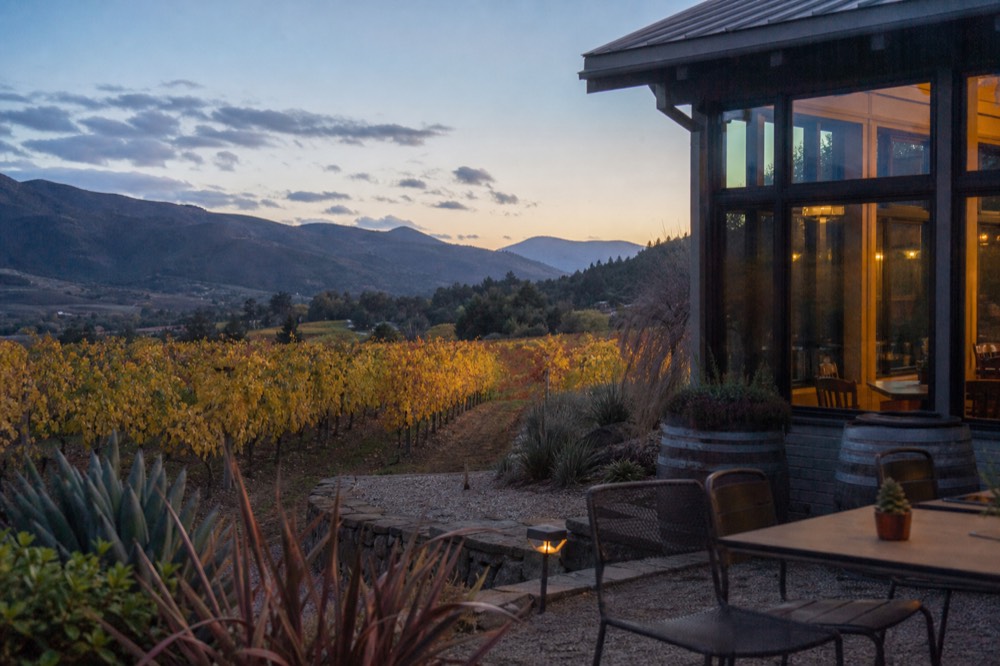
Summer is peak, so book earlier and expect busier rooms. The coast can sit under a morning marine layer that locals call May Gray and June Gloom, but the valley usually burns off warmer and drier than the shore, which is one reason a valley day can beat a coastal one on a foggy morning. Winter is the quiet, green, wallet-friendly season. The table below lays out the trade-offs.
| Season | Weather inland | Crowds | Why go then |
|---|---|---|---|
| September to November | Warm days, cool nights, harvest color | Busy on event weekends | Fall light and harvest buzz |
| June to August | Warm and dry, coast may be foggy | Peak | Long days, book ahead |
| December to February | Cool, green, occasional rain | Quietest | Lowest prices, unhurried rooms |
| March to May | Mild, green hills | Building | Wildflowers and shoulder-season value |
If your dates are flexible, our month-by-month look at which month suits your trip goes deeper on weather and events. Whichever window you pick, the three valley days below give you a clean spread from the most-reviewed all-inclusive tour to the top-rated picnic day and the budget shuttle, so you can hold a date while the good weather holds.
Common questions about Santa Ynez Valley wineries
How many wineries are in the Santa Ynez Valley?
The valley holds the largest share of Santa Barbara County's more than 250 wineries, spread across six towns and four sub-appellations. Exact counts shift as rooms open and close, but the valley far outweighs the coastal city's tasting district in vineyard acres and estates.
Which towns have the most wineries in the Santa Ynez Valley?
Los Olivos is the walkable tasting-room village, Solvang has the most beds and a growing wine scene, and Santa Ynez, Ballard, Los Alamos and Buellton fill out the valley. A separate cluster of rooms sits in the Lompoc Wine Ghetto near the cool Sta. Rita Hills vineyards.
What wine is the Santa Ynez Valley known for?
Cool-climate Pinot Noir and Chardonnay from the western Sta. Rita Hills, Syrah and Rhône reds from Ballard Canyon in the middle, and Bordeaux reds like Cabernet Sauvignon from warm Happy Canyon in the east. That Burgundian-to-Rhône-to-Bordeaux range in one valley is unusual.
Can you walk between wineries in the Santa Ynez Valley?
In the towns, yes. Los Olivos, Solvang, Los Alamos and the Lompoc Wine Ghetto all cluster rooms you can cover on foot. The rural estates between the towns are dispersed across ranch roads and are not walkable, and many take reservations only, so a driver or tour makes sense for those.
Do you need a tour to visit Santa Ynez Valley wineries?
Not for the walkable towns, where you can taste on foot. For the rural estates a tour or designated driver makes sense: they are dispersed and not walkable, California's limit is 0.08 percent, and many rooms now take reservations only, which a tour arranges in advance.
How far is the Santa Ynez Valley from Santa Barbara?
The valley sits about forty minutes inland. Santa Barbara city to Los Olivos is roughly 35 miles and 45 to 50 minutes over Highway 154, the scenic San Marcos Pass, with Solvang a similar distance. Los Angeles is around two hours away, about 129 miles.