What are the most beautiful wineries in Santa Barbara County?
The most beautiful Santa Barbara County wineries, by setting: oak-studded valleys, fog-swept Pinot country, hilltop estates and the coastal American Riviera light.
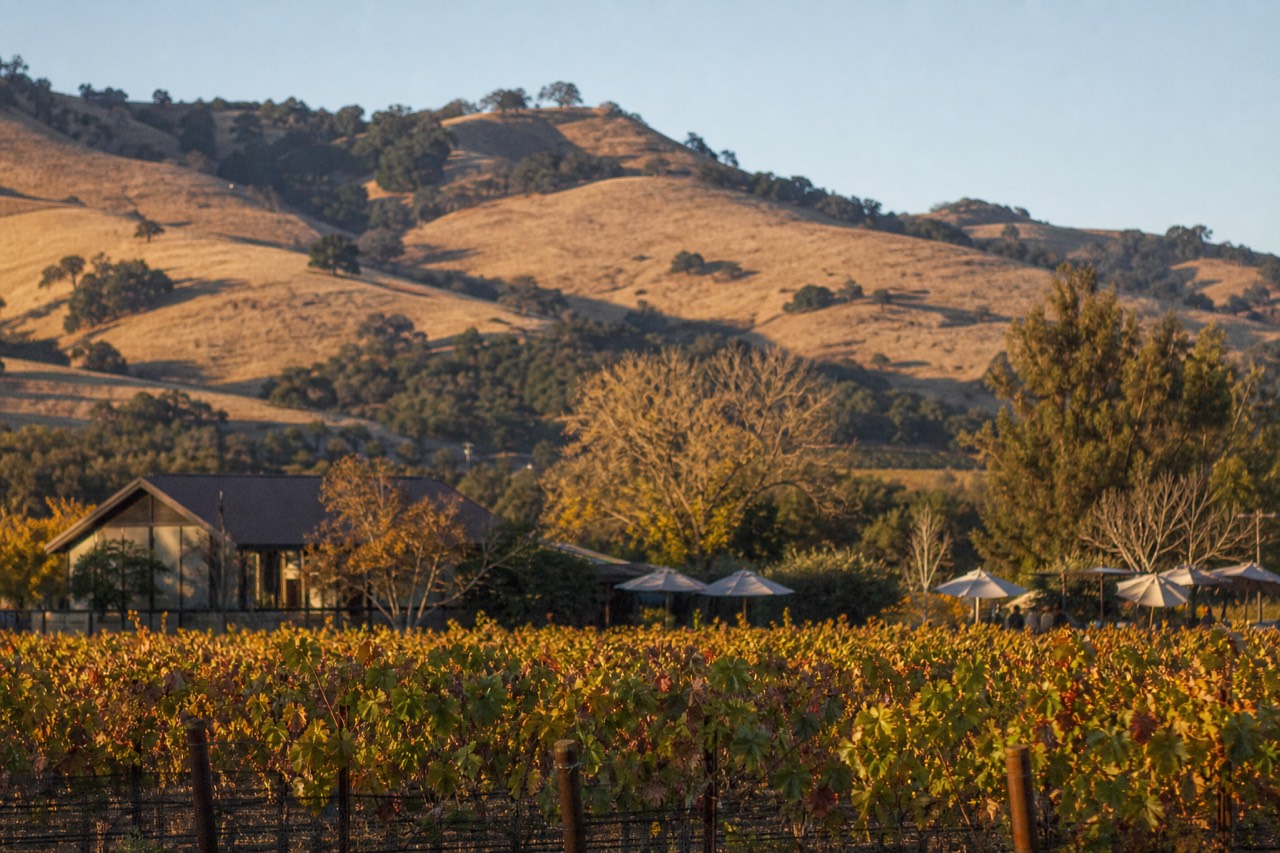
Santa Barbara sits on a stretch of coast locals call the American Riviera, where the mountains meet the Pacific and the light turns gold in the late afternoon. That light does not stop at the shoreline. It carries over the coastal range and pours across the vineyards inland, and it is the single biggest reason people call this county's wine country beautiful. The scenery here is not one photogenic building. It is a whole landscape of oak-studded hills, fog and golden ground.
Ask which wineries are the most beautiful and you quickly hit an honest wall: beauty is subjective, and a room that stuns one visitor leaves another cold. So this is not a ranked list of names with invented scores. It is a guide to where the county's most striking winery scenery actually sits, organized by the settings that make it beautiful, so you can chase the kind of view you came for. The regions and the geography are all real and on the record.
What are the most beautiful wineries in Santa Barbara County?
The most beautiful wineries in Santa Barbara County are defined by their settings, not any single building. The classic scenes are oak-studded golden hills around Santa Ynez and Ballard Canyon, fog-draped Pinot Noir vineyards in the cool western Sta. Rita Hills, hilltop estates with long valley views, and the coastal light of the American Riviera that touches all of it.
The honest answer to "which winery is most beautiful" is that it depends on what moves you. Some visitors want a hilltop with a view that runs for miles. Others want to sit under an ancient oak with rows of vines falling away, or watch fog roll off the hills in the cool west. No single room owns all of that, which is why chasing a scene beats chasing a name.
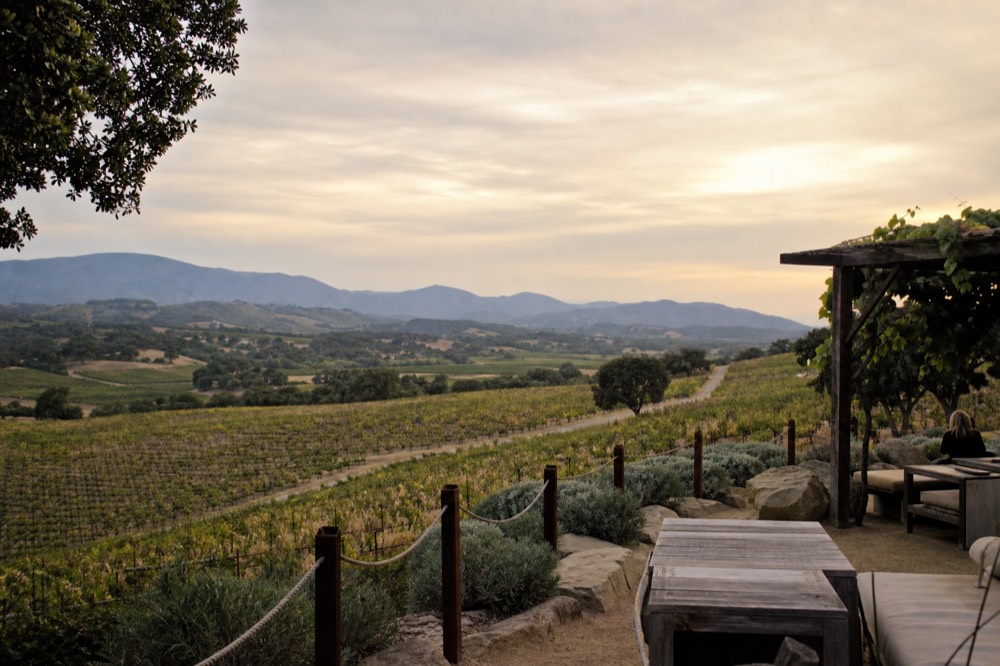
What the county does offer, better than almost anywhere, is variety of setting within a short drive. In one day you can move from the fog-cooled western vineyards to the warm, oak-dotted heart of the valley to a room in a walkable town. That range is the real luxury here, and it is why so many people who come for the wine leave talking about the views. Before we break the scenery down region by region, here are the valley days that reach the most striking estates with the driving handled.
What makes Santa Barbara wine country so beautiful?
Two things: the light and the land. Santa Barbara's coastal ranges run east to west, unusual on the West Coast, funneling Pacific fog and soft marine light inland across the vineyards. The ground itself is classic California, golden grass, scattered live oaks and rolling hills, and the fall harvest turns the vine rows gold and rust.
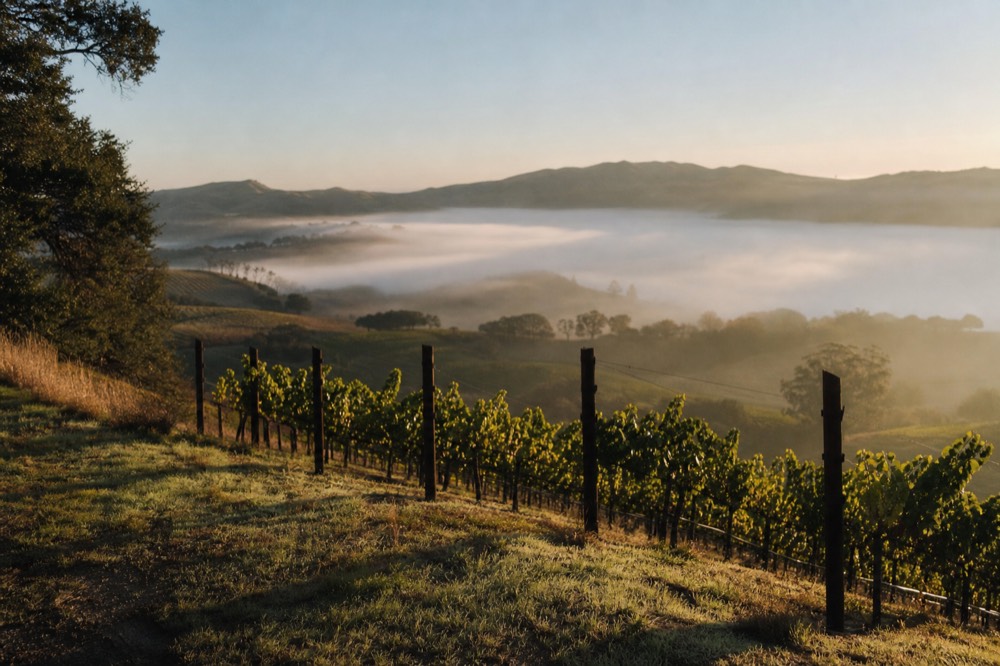
The geography here is genuinely unusual, and it shapes the beauty as much as the wine. Most West Coast mountains run north to south, walling the coast off from the interior. Santa Barbara County's ranges run east to west, so the valleys open straight to the ocean and the sea air pours in. That gives the western vineyards their signature mornings, low fog draped over the rows, burning off to bright afternoons.
Then there is the land itself, which is the California of the imagination: golden hillsides studded with gnarled live oaks, ranch roads winding between vineyard blocks, and the coastal range as a backdrop. In fall, when harvest runs from late August into October, the vine rows turn gold and rust and the light softens, which is why photographers time their visits for autumn. The setting was striking enough that the film Sideways used it as a character in its own right twenty years ago, and the valley has traded on that beauty ever since.
There is also the rare pairing of ocean and vines. Few American wine regions put a working harbor within an hour of the vineyards, and that coastal edge shapes the whole feel of the place. A morning by the beach, an afternoon among the rows, and the same soft Pacific light falling over both is the combination the American Riviera nickname was built on, and it is hard to find anywhere else in the state.
Which region has the most beautiful vineyard scenery?
Each region has a different kind of beauty. The cool western Sta. Rita Hills gives you fog and drama over Pinot Noir vines; Ballard Canyon and the Santa Ynez heart give you the oak-studded golden hills people picture; Happy Canyon in the warm east feels big and open; and the Santa Maria Valley to the north runs wide and pastoral. The setting changes with the climate.
Because the county spans a cool-to-warm gradient, its scenery changes as you move across it, and the most beautiful region really depends on the mood you are after. The west is moody and cinematic, all fog and cool light. The central valley around Santa Ynez and Ballard is the warm, golden, oak-dotted picture most people carry in their heads. The east is broader and more open.
None of these is objectively prettier than the others, but they photograph and feel distinct, and knowing which is which helps you plan. The table below sorts the county's main wine areas by the kind of scenery each one delivers, drawn from the region's real geography rather than any ranking.
| Region | Scenery | Signature mood | Best light |
|---|---|---|---|
| Sta. Rita Hills | Fog over cool Pinot vines | Cinematic, moody | Early morning fog |
| Ballard Canyon | Oak-studded golden hills | Warm, classic California | Late afternoon |
| Santa Ynez heart | Rolling ranch country | Pastoral, open | Golden hour |
| Happy Canyon | Broad warm valley | Big and expansive | Midday to sunset |
| Santa Maria Valley | Wide pastoral vineyards | Sweeping, rural | All day |
The oak-studded heart around Santa Ynez and Ballard Canyon is the one most first-time visitors mean when they say "beautiful wine country," and it is where a small-group valley day tends to spend its time. If you want to zero in on the single most photogenic corner, our post on the prettiest vineyards in the valley narrows it further, and the cool, dramatic west is covered in our guide to the fog-swept Sta. Rita Hills.
A note on how to use these regions rather than just admire them. Because the county spans such different climates, the smartest scenic days pair a couple of them rather than staying put: an hour in the fog-cooled west, then a warm oak-studded estate in the middle, catches two very different pictures in one afternoon. That contrast is easier to arrange on a guided day, which can plot the route across regions without anyone having to drive between tastings.
What kinds of beautiful winery settings should you look for?
Look for four kinds of setting: hilltop estates with long views, oak-shaded terraces where you taste under old trees, coastal-influence vineyards with fog and soft light, and Spanish-colonial adobe rooms with red-tile roofs. Each delivers a different photograph, and most striking winery days combine two or three of them across a single afternoon.
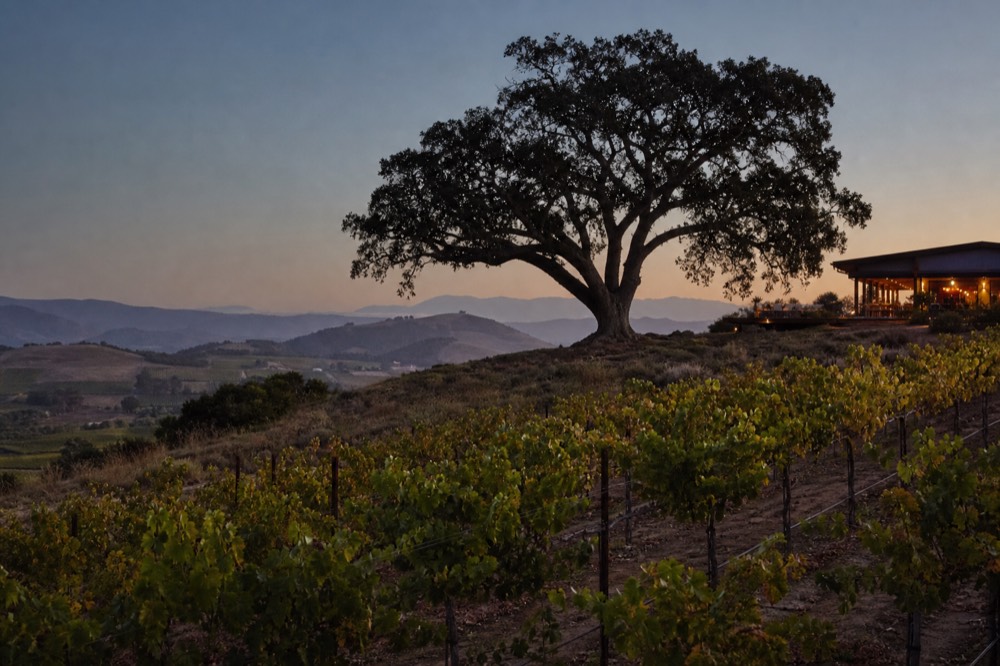
If beauty is what you are chasing, it helps to know the ingredients rather than the addresses. Across the county, the settings that consistently stop people fall into a handful of types, and you can seek them out whatever the specific room. A hilltop estate trades intimacy for a view that runs to the mountains. An oak-shaded terrace does the opposite, wrapping you close in dappled light.
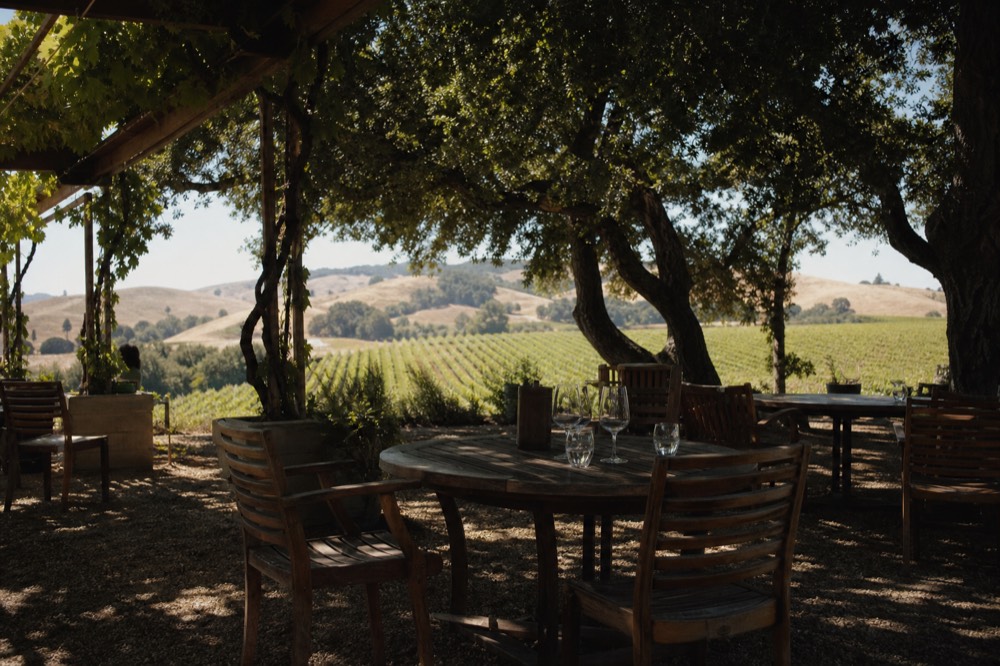
The county's Spanish and Mexican history shows up in its architecture, too, and adobe walls with red-tile roofs give some rooms a warm, Mediterranean look that suits the light. Down on the coast, the walkable city district trades vineyard views for a different kind of charm, industrial roll-up doors and harbor air. The table below lays out the setting types and where to find each.
| Setting type | What you get | Where it shows up |
|---|---|---|
| Hilltop estate | Long valley and mountain views | Ballard Canyon, Happy Canyon ridges |
| Oak-shaded terrace | Dappled light, intimate rows | Santa Ynez, Los Olivos country |
| Coastal-influence vineyard | Fog, soft light, drama | Sta. Rita Hills, Santa Maria |
| Adobe and red-tile room | Warm Mediterranean architecture | Scattered valley estates |
| Urban tasting room | Harbor air, warehouse character | Coastal city district |
Most beautiful winery days here are not built around one setting but a mix, which is part of the appeal. A guided valley day will often pair an oak-shaded estate with a hilltop view and a walkable town, so you collect several kinds of scene in an afternoon. For the coastal version of that, with harbor air instead of vineyard rows, our guide to the downtown tasting district covers the walkable city rooms.
Are the city or valley wineries more scenic?
For classic vineyard beauty, the inland valley wins: it has the vines, the oaks and the rolling hills. The coastal city has almost no vineyards, but its walkable tasting district trades vineyard views for harbor air, warehouse-district character and the ocean a block away. They are two different kinds of beautiful, and many visitors do both.
This is a fair question with an honest split. If your idea of a beautiful winery is rows of vines under golden hills, the valley is where to go, because the city's downtown rooms sit in a converted industrial neighborhood with the wine trucked in rather than grown out back. There are almost no vineyards in the city itself.
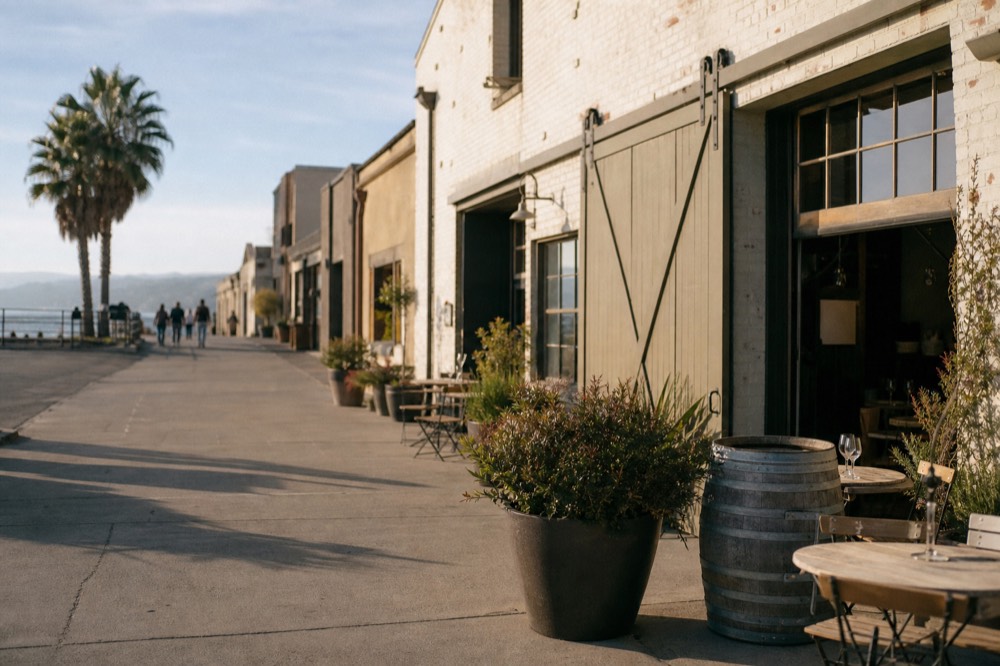
That does not make the city ugly, just different. The downtown district has its own charm, roll-up doors, string lights, the harbor and the train station a short walk off, and the ocean right there, which no valley estate can offer. The table below sets the two kinds of beauty side by side so you can pick the scenery that matters more to you.
| Coastal city district | Santa Ynez Valley | |
|---|---|---|
| Vineyard views | Almost none | The main event |
| Scenery | Harbor, warehouse charm, ocean | Oaks, golden hills, vine rows |
| Getting around | Walkable, no car | Driving between estates |
| Best for | Ocean air, a car-free stroll | Classic vineyard photographs |
The e-bike day is one of the more scenic ways to see the valley itself, pedaling among the vines rather than watching them through a windshield, rated a perfect 5.0 across 131 reviews. It turns the landscape into the whole point of the day rather than the space between tasting rooms.
When does the wine country look its most beautiful?
Fall, from September into November, is when the wine country looks its best: the vines turn gold and rust, the light softens, and harvest energy fills the rooms. Spring brings green hills and wildflowers, summer runs golden but can start foggy on the coast, and winter is quiet and green after the rains. Late afternoon is the golden hour for photographs.
If beauty is your priority, timing matters as much as place. The fall harvest window is the classic answer, when the vineyards change color and the low autumn sun rakes across the rows. Those months also bring the most settled inland weather, warm days and cool nights, and the rooms buzz with fruit coming in.
Spring is the underrated alternative. After the winter rains the hills go a vivid green and wildflowers come out, a look that only lasts a few weeks before the grass turns golden for summer. Summer itself is beautiful in a golden, dry way, though the coast can start under morning fog that the inland valley usually escapes. The table below matches season to scenery.
| Season | How it looks | Why it is beautiful |
|---|---|---|
| September to November | Gold and rust vines, soft light | Harvest color and the year's best light |
| March to May | Green hills, wildflowers | Brief, vivid green after the rains |
| June to August | Golden, dry, sometimes foggy coast | Long days and warm evenings inland |
| December to February | Green, quiet, occasional rain | Uncrowded, freshly green hills |
Whatever season you pick, the late afternoon is the hour to chase, when the light turns gold and the hills glow. If you want to line up your visit with the prettiest window, our month-by-month look at which month suits your trip goes deeper, and our roundup of the valley's small wine towns covers the charming villages worth building a scenic day around.
The simplest way to actually reach these settings, rather than admire them from the road, is a guided day that does the driving. The valley estates are dispersed and not walkable, and the most scenic ones sit out among the vines. At Santa Barbara Wine Tours we point you to the real day that gets you into the landscape, with someone else at the wheel. The three valley days below give you a clean spread from the top-rated picnic tour to the most-reviewed all-inclusive day and the scenic e-bike ride.
Common questions about beautiful Santa Barbara wineries
What are the most beautiful wineries in Santa Barbara County?
Beauty here comes from the setting rather than any one building. The most striking scenes are oak-studded golden hills around Santa Ynez and Ballard Canyon, fog-swept Pinot Noir vineyards in the cool western Sta. Rita Hills, hilltop estates with long valley views, and the coastal American Riviera light that touches all of it.
What is the most beautiful vineyard region in Santa Barbara?
Each region offers a different beauty. The oak-studded heart around Santa Ynez and Ballard Canyon is the warm, golden picture most people mean by beautiful wine country. The cool western Sta. Rita Hills is more cinematic, with fog over the Pinot vines, and the Santa Maria Valley runs wide and pastoral.
Are Santa Barbara city or valley wineries more scenic?
For classic vineyard views the inland valley wins, since it has the vines, oaks and rolling hills. The coastal city has almost no vineyards, but its walkable downtown tasting district offers harbor air, warehouse-district character and the ocean a block away. They are two different kinds of beautiful, and many visitors do both.
When does Santa Barbara wine country look its best?
Fall, from September into November, is the peak, when the vines turn gold and rust and the light softens during harvest. Spring brings green hills and wildflowers, summer runs golden but can start foggy on the coast, and winter is quiet and green. Late afternoon is the golden hour for photographs.
How do you visit the most beautiful wineries without driving?
Take a guided valley day. The most scenic estates are dispersed across ranch roads and not walkable, and California's driving limit is 0.08 percent, so a tour handles the driving and books the rooms. A small-group day reaches oak-studded valley estates, and an e-bike day puts you right among the vines.