What movie was filmed in Solvang?
Sideways put the Santa Ynez Valley on the map in 2004. Where it filmed, the Pinot Noir boom that followed, and how to stand in its locations today.
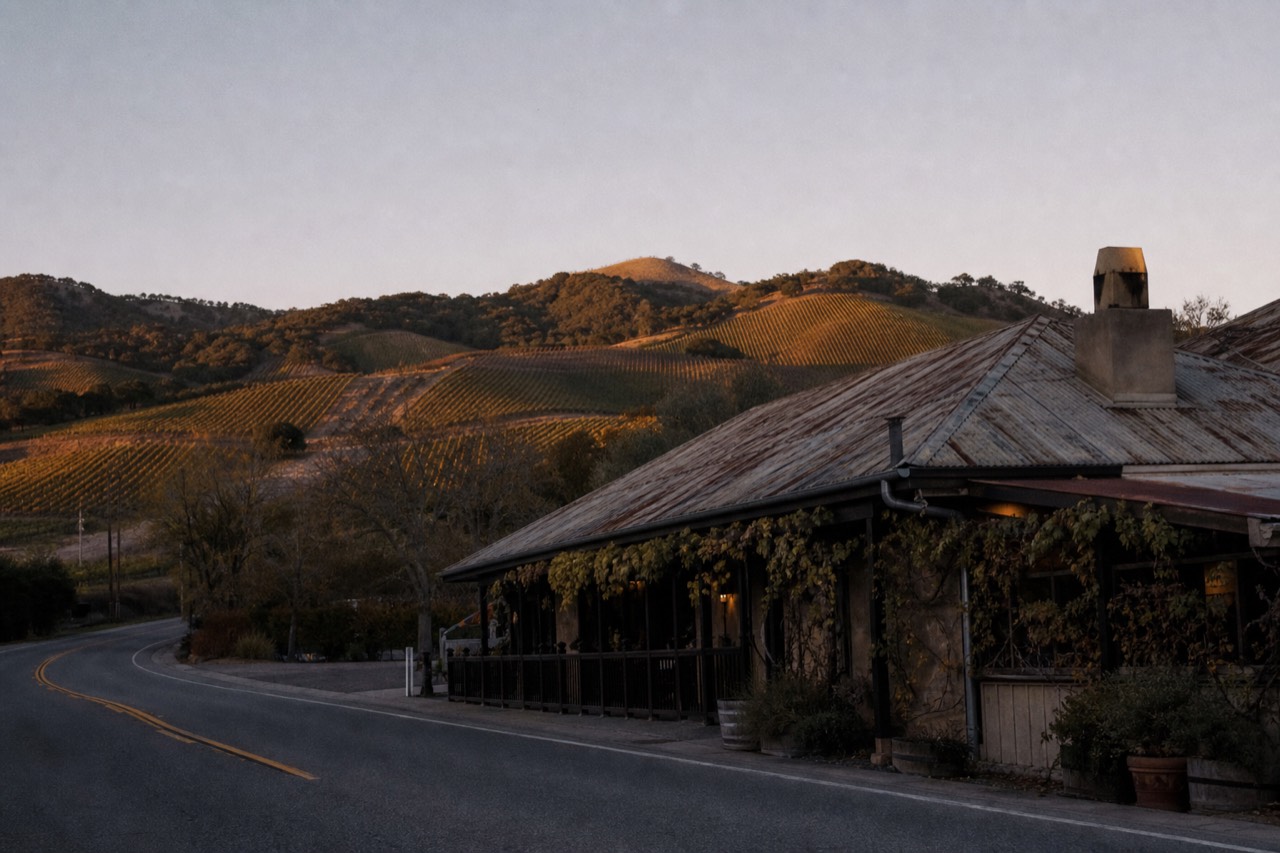
In the year after a small road-trip comedy reached cinemas in October 2004, Pinot Noir sales in the United States climbed by roughly 16 percent, and one modest steakhouse in Buellton reportedly watched its business jump by close to half. The cause was not a marketing campaign or a critic's list. It was a two-hour film about two middle-aged friends drinking their way through a California valley most of the country could not have found on a map.
The movie filmed in Solvang and across the surrounding Santa Ynez Valley is Sideways, Alexander Payne's 2004 comedy about two friends on a week-long wine trip. It was shot in Solvang, neighboring Buellton and Los Olivos, using real tasting rooms, the Hitching Post II restaurant and the valley's back roads as its backdrop.
Twenty years on, the valley is still living inside that film's afterglow. The tasting rooms multiplied, the Pinot Noir got serious, and a steady trickle of visitors still arrives asking where Miles and Jack drank, ate and fell apart. This is the honest version of that story: what the film actually shot, what it did to the wine business, and how you can retrace its route today without renting a car and driving the passes yourself.
Where in the Santa Ynez Valley was Sideways filmed?
Sideways filmed across the inland Santa Ynez Valley rather than in a single town. The key locations are the Hitching Post II steakhouse in Buellton, the Danish-themed streets of Solvang, the walkable tasting-room village of Los Olivos, and the ranch-road wineries out toward Foxen Canyon. All of them are real, working places you can still visit.
The film is a driving movie, so its locations are strung along the valley the way a real tasting day is. Buellton, a small town on Highway 101, holds the roadhouse that became the story's emotional center. A few minutes east, Solvang supplies the walkable, slightly surreal Danish streetscape where several scenes play out. Los Olivos, smaller and quieter, is the cellar-door village. And the open country between them, toward Foxen Canyon and the Fess Parker area, is the vineyard backdrop that framed the trip.
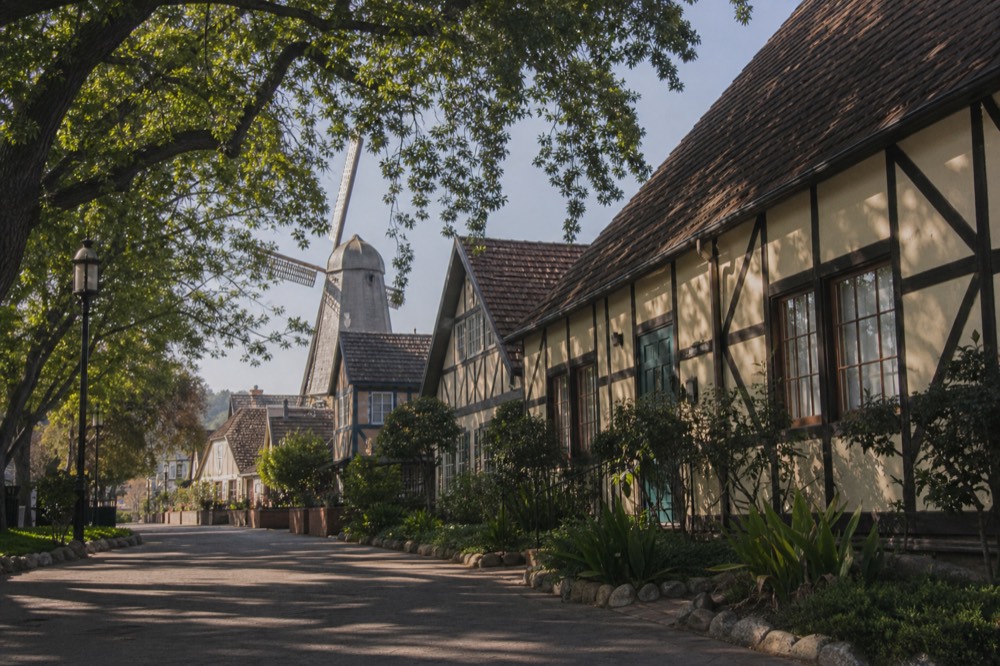
The table below sorts the main locations by town, what each one is, and whether you can still walk into it. Because these are living businesses rather than a preserved film set, some have changed hands or menus over the years, but the places themselves remain.
| Location | Town | What it is | Still there? |
|---|---|---|---|
| Hitching Post II | Buellton | Steakhouse and wine bar, the film's anchor | Yes, a working restaurant |
| Solvang streets | Solvang | Danish-themed town, walking scenes | Yes, walkable |
| Los Olivos tasting rooms | Los Olivos | Cellar-door village | Yes, walkable |
| Foxen Canyon country | Santa Ynez Valley | Ranch-road vineyard scenery | Wineries still open |
If you would rather see how these towns fit together as a wine destination rather than a film map, our guide to tasting your way around Solvang and the wider look at how the valley's tour days compare both cover the same ground with the pours front and center.
Before you start plotting a route, a quick reality check on how people actually do this valley today, because most of them are not driving themselves between these dots.
What is the Hitching Post, and can you still eat there?
The Hitching Post II in Buellton is a real steakhouse and wine bar that appears throughout Sideways, and it still serves diners today. Its owner-winemaker made Pinot Noir long before the film, and the restaurant's own label became a quiet star of the story. You can eat there, order that wine, and sit where the characters did.
Of all the film's settings, this is the one people ask about most, and it is the least changed. It was a working restaurant before Sideways, and the movie did not build it a set or a facade. The wine the characters drink is the restaurant's own, made by its proprietor, which is why the place carries a double life as both a steakhouse and a small winery brand.
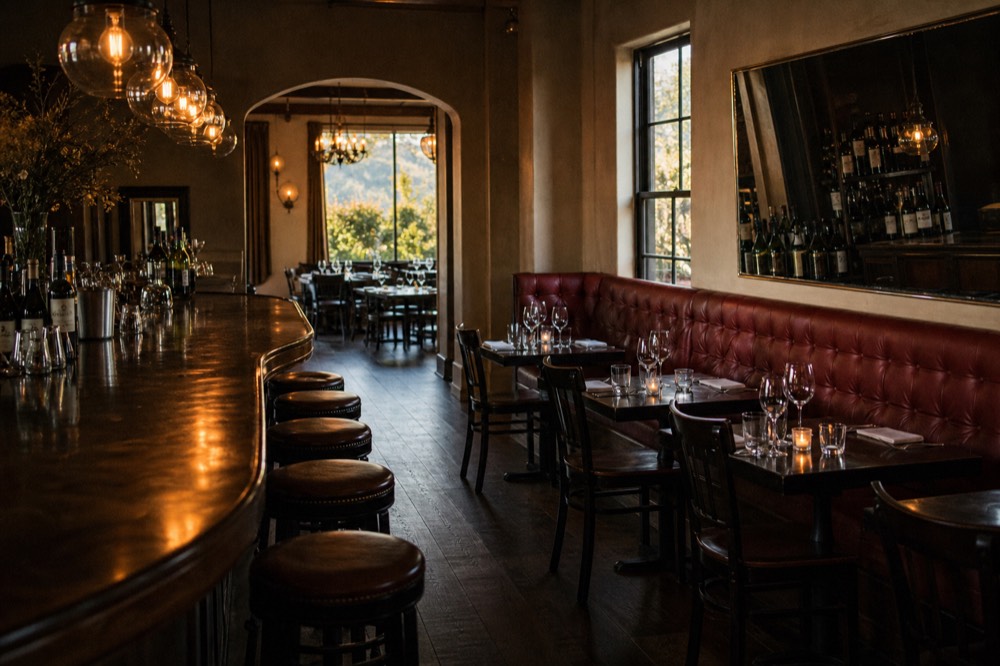
The honest note for visitors is that it is popular and it is a restaurant, not a museum, so it books up and it exists to feed people rather than to stage photographs. Come hungry, treat it as dinner, and the film history takes care of itself. It sits close enough to Solvang that most valley tours can fold Buellton into a day, and it pairs naturally with the walkable rooms our look at the walkable tasting rooms of Los Olivos covers in detail.
What was the Sideways effect on Pinot Noir and Merlot?
The Sideways effect is a documented shift in American wine buying after the 2004 film. The narrator's love of Pinot Noir and open contempt for Merlot tracked a real, measurable rise in Pinot sales and a dip in Merlot growth, strongest in the middle price tiers. Economists later confirmed the pattern in a peer-reviewed study.
This is the part that turned a film into a business-school case. The movie's lead character worships Pinot Noir and delivers a now-infamous refusal to drink any Merlot, and American buyers appeared to follow him. The pattern was strong enough that researchers went looking for it in the sales data, and they found it.
A study in the Journal of Wine Economics tested wine sales before and after the release and reported a statistically significant increase in Pinot Noir volume and price, largest in the $20 to $40 range, alongside a small but real decline in Merlot's growth, concentrated at the cheaper end. Widely cited figures put the Pinot Noir sales jump at around 16 percent in the months after release. The table below lays out what moved.
| What was measured | What changed after 2004 | Where it was sharpest |
|---|---|---|
| Pinot Noir sales | Rose in both volume and price | Mid-tier bottles, about $20 to $40 |
| Merlot sales | Growth slowed and dipped | The cheaper, under $10 segment |
| Santa Barbara wineries | Grew from about 60 to more than 250 | Across the county since 2001 |
| Valley tourism | A lasting film-trail draw | Buellton, Solvang and Los Olivos |
What makes the effect stick in memory is the sharpness of one line. The film's flat refusal to drink Merlot became a punchline the wider culture repeated for years, and it dented the grape's image far more than its quality, which never actually changed. Winemakers in this valley still field the joke two decades later, usually while pouring a Merlot worth taking seriously. The lesson most of them draw is quieter than the movie's: reputation and quality are not the same thing, and a good bottle does not care what a fictional character thought of its varietal.
The winery-count growth is the piece you can still see with your own eyes. According to the county's vintners association, Santa Barbara has gone from about 60 wineries around 2001 to more than 250 today, and while Sideways was not the only reason, the timing is hard to ignore. If varietals are what pull you here, our post on what this valley is really known for gets into why its Pinot Noir earned the reputation the film borrowed.
Can you still visit the Sideways filming locations today?
Yes. The main Sideways locations are real, working places you can visit: the Hitching Post II in Buellton, the streets of Solvang, the tasting rooms of Los Olivos and the vineyard country around them. There is no single official Sideways tour product, so most visitors retrace the route on a standard valley wine day.
Two decades of film pilgrims have kept the route alive, and unlike many movie locations, almost nothing here was torn down or turned into a parking lot. The valley simply kept being itself, which is the whole point. You can eat at the roadhouse, wander the Danish town, and taste in the same walkable village the characters visited, all in a single afternoon.
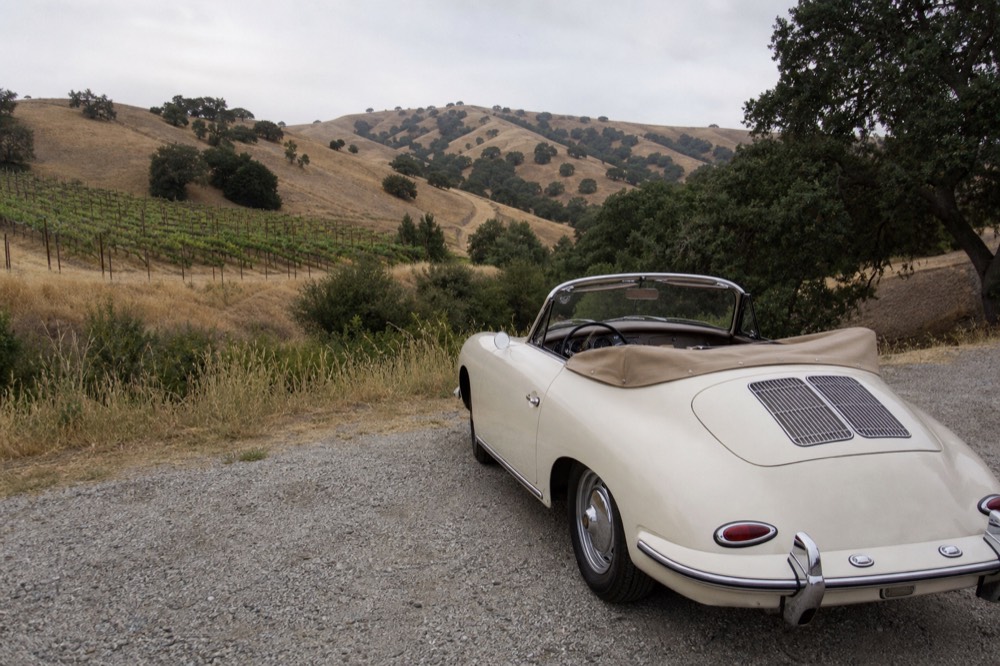
Here is the honest limitation. Despite how neatly the film maps onto the valley, there is no dedicated, currently bookable Sideways-branded tour in this lineup, and we will not invent one to fill the gap. What exists instead are real valley wine days that pass through the same towns. The most natural fit is a Solvang-based small-group day, because it works from inside the valley rather than shuttling up from the coast, so more of your time goes to the towns and less to the drive. At Santa Barbara Wine Tours we point you to the real day that gets you there, not a costume version of it.
The pull has not faded with time. On the film's twentieth anniversary, writers and travelers were still retracing the route, and local restaurants and tasting rooms still see people order what the characters ordered. That kind of staying power is rare for a movie location, where the usual pattern is a brief rush and then a slow forgetting. Here the opposite happened, because the setting was never a set. It was a working wine region that the film simply pointed a camera at, and it has kept getting better at the thing it was already doing.
Is Solvang worth visiting beyond the movie?
Solvang is worth a stop for the wine as much as the windmills. The Danish-village theme draws the crowds, but the town now holds a real cluster of tasting rooms, and it sits minutes from Buellton, Los Olivos and the valley's estates. Treat the half-timbered streets as the setting and the cellar doors as the reason.
It is easy to file Solvang under kitsch: the bakeries, the windmills, the Christmas-all-year feel. That version is real, and plenty of visitors come only for that. But framing the town as a theme park sells short what has happened to it, because the wine scene there has grown steadily, with new rooms opening in recent years even as the wider county's tasting-room map shifts.
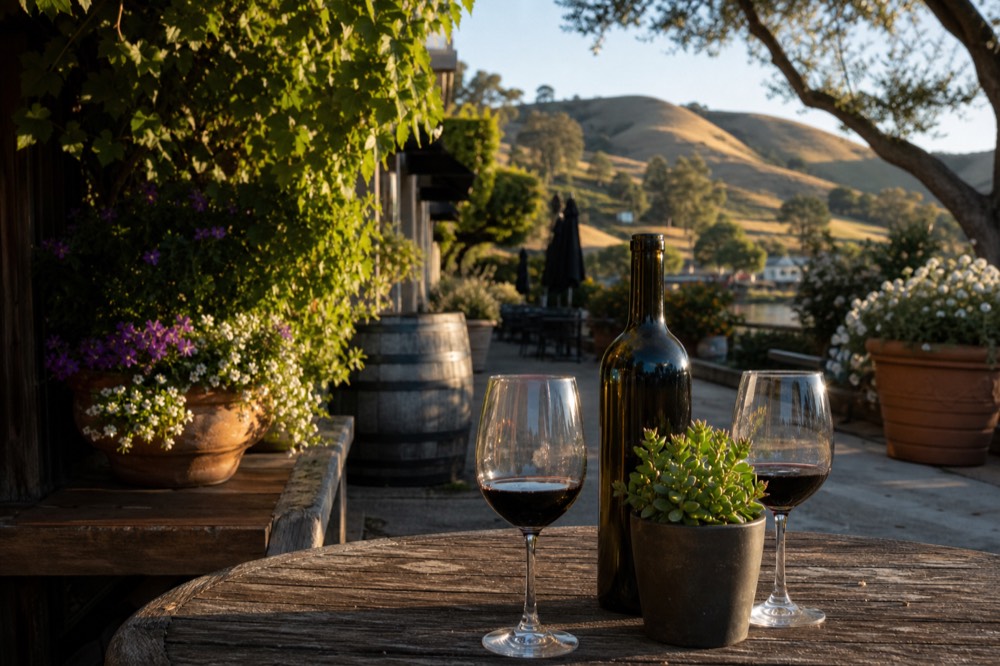
What you can actually taste there has broadened, too. The rooms in and around Solvang pour the valley's full range, from cool-climate Pinot Noir and Chardonnay grown out west toward the fog to the Rhône and Bordeaux reds of the warmer inland canyons, ground that the government carves into seven federally recognized wine appellations. A walkable Solvang afternoon can cover more of that range than the town's fairy-tale front suggests. Recognition has followed the wine rather than the windmills: a Solvang tasting room was named among the best in the country in a recent national readers' poll, which is not the kind of honor a theme-park stop tends to collect.
The practical case for Solvang is location. It is walkable, it has beds and restaurants, and it is a short hop to the estates that are not walkable at all. Base yourself there and the valley opens up around you. If you are weighing whether the town earns an overnight, our fuller take on whether Solvang is worth the trip and the roundup of the valley's small wine towns both go beyond the postcard.
How do you follow the Sideways trail without driving it?
The simplest way to retrace the film is a guided valley day, because the driving is the problem the movie itself joked about. A tasting route crosses several stops, California's legal limit is 0.08 percent, and the valley estates are dispersed and not walkable. A tour books the rooms, handles the passes, and lets everyone actually drink.
There is a certain irony in taking a drink-and-drive comedy as a template for your own day, and the film knew it. The real valley is exactly the kind of place where you should not be the one driving. The wineries are scattered across ranch roads, the good ones increasingly want a reservation, and the drive between the coast and the towns climbs a mountain pass at each end.
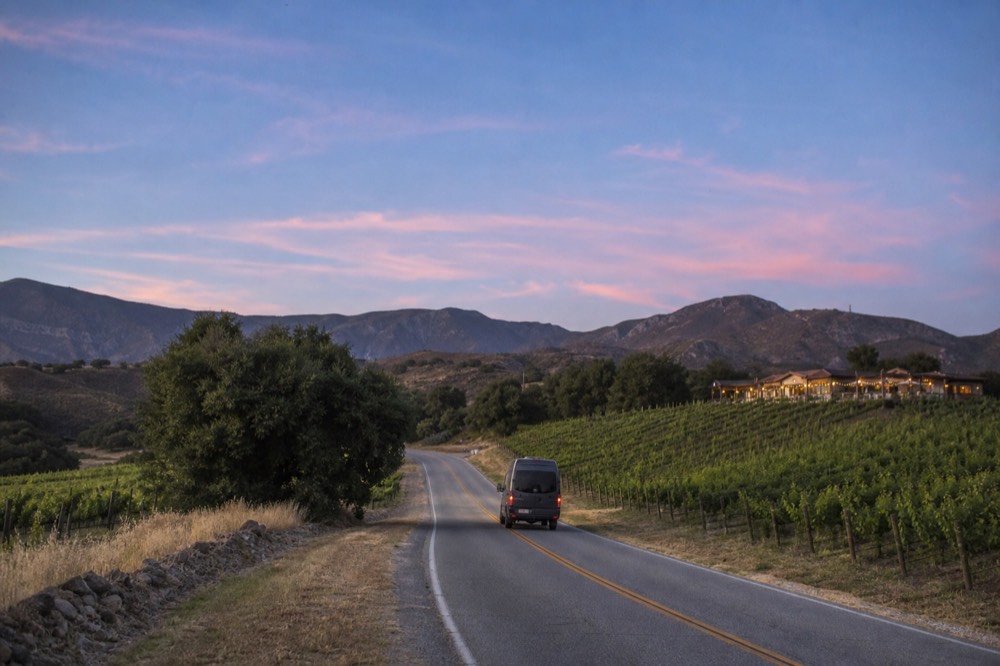
A guided day solves all of it at once. The table below lines up the valley days that pass through the film's towns, so you can pick by where you are staying and what you want included. If you are curious whether the region runs anything more novel, our post on whether there is a wine train here is worth a look, and the logistics of getting up from the coast are covered in reaching the valley from Santa Barbara.
| Tour | Where it is based | What is included | Rating and price |
|---|---|---|---|
| Solvang valley small-group | The valley itself | Lunch and tastings | 4.8 across 145 reviews, price on the listing |
| Small-group, 3 wineries and picnic | Pickup toward the valley | Picnic lunch, seated tastings | 4.9 across over 110 reviews, price on the listing |
| All-inclusive valley day | Pickup toward the valley | Lunch and fees in one price | 4.8 across over 230 reviews, price on the listing |
| Valley day with lunch from Solvang | Solvang | Lunch and tastings | Newer listing, from $230 per person |
Whichever you choose, book the date before the good months fill. The three valley days below give you a clean spread from a value Solvang small-group to the top-rated picnic day and the most-reviewed all-inclusive tour, all passing through the country Sideways made famous.
Common questions about Sideways and the Santa Ynez Valley
What movie was filmed in Solvang?
The movie is Sideways, Alexander Payne's 2004 comedy about two friends on a wine trip. It filmed in Solvang and across the surrounding Santa Ynez Valley, including Buellton and Los Olivos, using real tasting rooms, the Hitching Post II restaurant and the valley's back roads.
Where is the Hitching Post from Sideways?
The restaurant in the film is the Hitching Post II in Buellton, a small town on Highway 101 in the Santa Ynez Valley. It is a real, still-operating steakhouse and wine bar whose owner also makes Pinot Noir, the wine the characters drink on screen.
Did Sideways really boost Pinot Noir sales?
Yes. A peer-reviewed study in the Journal of Wine Economics found a real, significant rise in Pinot Noir volume and price after the 2004 film, strongest in the $20 to $40 range, along with a dip in Merlot growth. Pinot Noir sales are widely reported to have jumped about 16 percent.
Is Solvang worth visiting?
Solvang is worth a stop for both the Danish-themed streets and a growing cluster of tasting rooms. It is walkable, has places to stay and eat, and sits minutes from Buellton, Los Olivos and the valley's estates, which makes it a practical base for a wine day rather than only a novelty.
Can you visit the Sideways filming locations today?
Yes. The Hitching Post II in Buellton, the streets of Solvang, the tasting rooms of Los Olivos and the surrounding vineyard country are all real places you can still visit. There is no single official Sideways tour, so most people retrace the route on a standard guided valley wine day.