Is there a wine train in Santa Barbara?
No, Santa Barbara has no Napa-style wine train. Here is what runs instead: the Amtrak-linked Funk Zone rooms and the guided vans up to the valley.
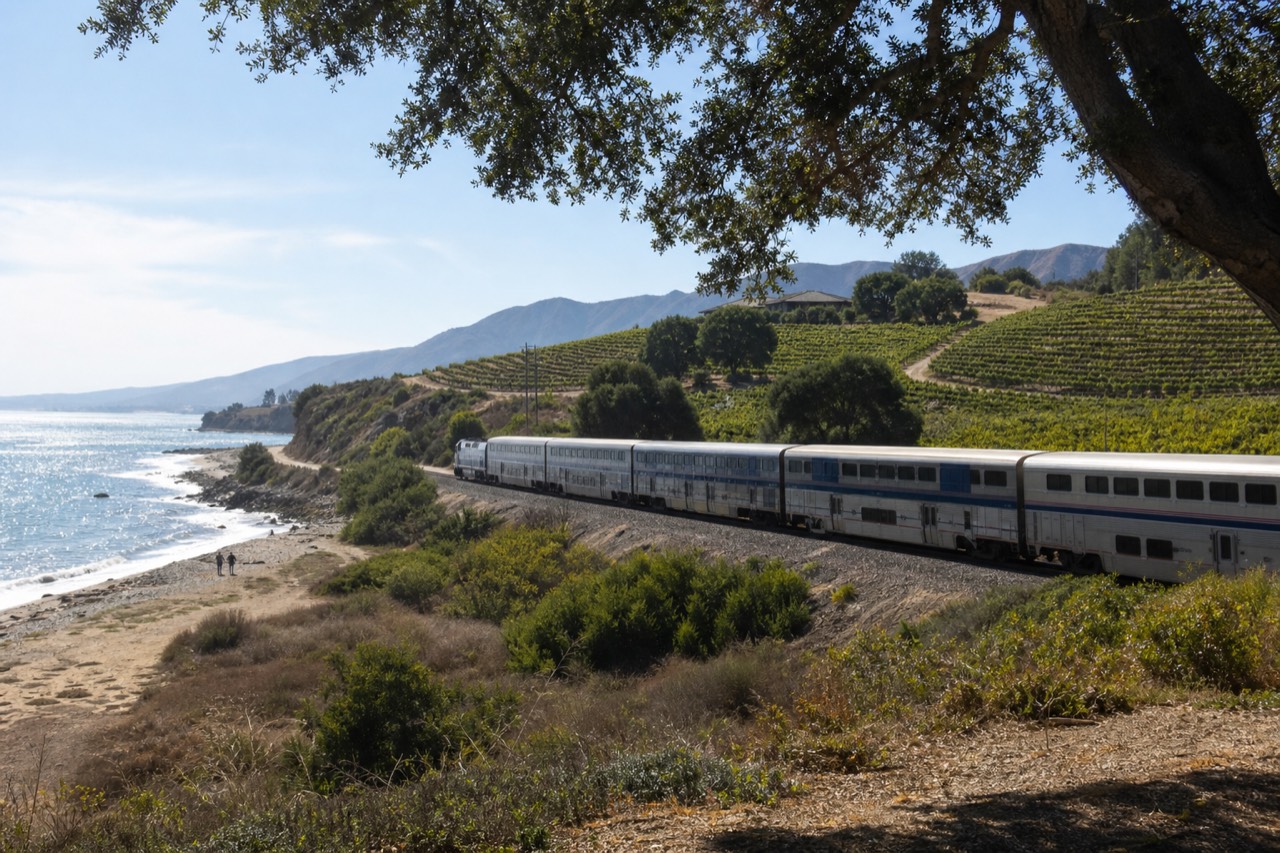
People search for a Santa Barbara wine train more than almost any other question about tasting here, usually after riding the Napa Valley Wine Train or reading about it, and expecting the same thing an hour and a half down the coast. The Amtrak Pacific Surfliner does glide right along the Santa Barbara waterfront, so the hope is reasonable. The answer, though, is a clean no, and it is better to hear it now than at a station platform.
Santa Barbara has no dedicated wine-tasting train like the Napa Valley Wine Train. The vineyards sit inland in the Santa Ynez Valley, off any rail line. What exists instead is genuinely good: the Amtrak Pacific Surfliner stops steps from the walkable Funk Zone tasting rooms, and guided vans and shuttles carry you up to the valley estates that a train never could.
This post is the honest map of how wine country actually works here, why no train runs through it, what the Amtrak line does and does not reach, and the real options that fill the gap. Some of them are arguably better than a train ride, because they take you to the vineyards themselves rather than a dining car. The short version is that you can absolutely do this without a car, just not on rails the way Napa markets it.
Is there a wine train in Santa Barbara?
No. There is no wine-tasting train excursion in Santa Barbara comparable to the Napa Valley Wine Train. No rail line runs through the Santa Ynez Valley vineyards, and no operator runs a tasting train. The Amtrak Pacific Surfliner passes through the city and stops near the walkable Funk Zone tasting rooms, but that is a regular passenger service, not a wine excursion.
The confusion is understandable, because two true facts sit right next to each other. Trains do run through Santa Barbara, and Santa Barbara is a serious wine region. People stitch those together and assume a wine train must exist. But the passenger train is the Pacific Surfliner, a normal coastal Amtrak route between San Diego and San Luis Obispo, and while its Santa Barbara stop is a short walk from a cluster of tasting rooms, riding it is nothing like the Napa experience of tasting on board a moving vintage train.
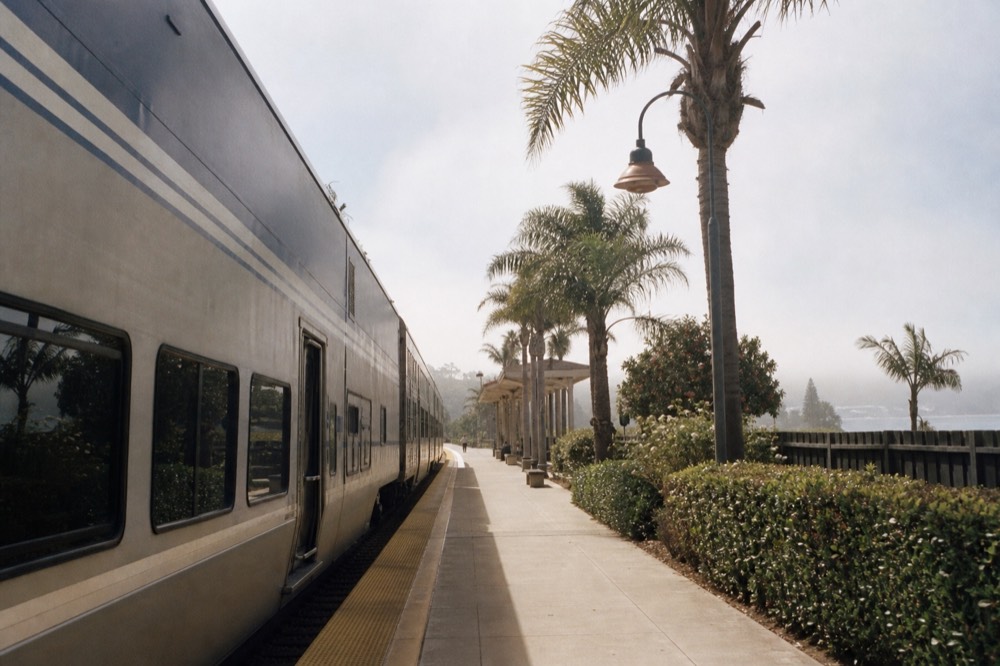
We will not paper over the gap by inventing a product that does not exist, because there is no shortage of real ones that do. What Santa Barbara offers instead is a split between an easy walkable urban scene you can reach by train, and a spread of inland valley estates you reach by guided van, shuttle or bike. Below are the three valley days most people book once they learn the train idea is a dead end, from the top-rated picnic day to the firm-priced guided tour and the cheapest guided shuttle up from the coast.
Why is there no wine train like Napa's?
Geography rules it out. Santa Barbara's vineyards sit inland in the Santa Ynez Valley, about 40 minutes over a mountain pass, and the estates are scattered across ranch roads rather than lined up along a rail corridor. The Napa Valley Wine Train runs on a historic track through a narrow valley of roadside wineries. Santa Barbara's wine country simply is not shaped that way.
The Napa train works because Napa's geography cooperates. That valley is long, narrow and threaded by a single historic rail line, with wineries strung close along it, so a train can trundle between them while diners eat. Santa Barbara County is built on a different plan entirely. Its wine country spreads across a wide inland valley reached only by crossing the Santa Ynez Mountains, and the estates sit dispersed on ranch roads and up canyons, far from any track.
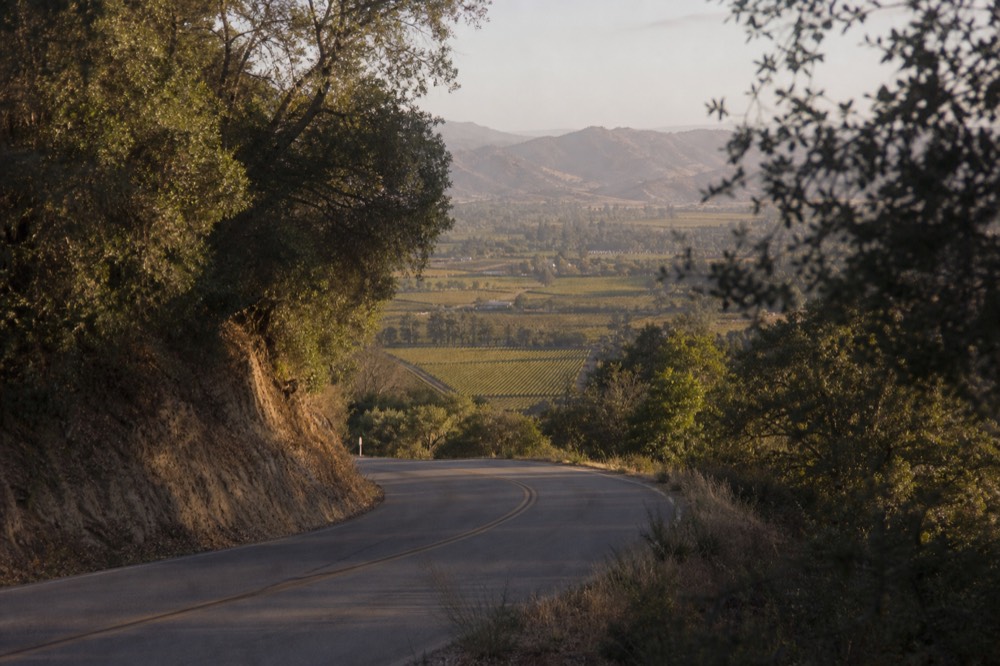
That dispersed layout is the same reason a guided tour beats self-driving here, and it is worth understanding before you plan. The county farms its more than 250 wineries across seven growing areas that fan out over the inland valley, not down a single street. The table below sets the Napa train against the Santa Barbara reality so the difference is plain.
| Napa Valley Wine Train | Santa Barbara wine country | |
|---|---|---|
| The layout | Wineries strung along one narrow valley | Estates dispersed across a wide inland valley |
| The rail line | Historic track runs through the vineyards | No rail line runs through the vineyards |
| Reaching it | Board the train in town | Cross a mountain pass by road, about 40 min |
| The experience | Tasting and dining on a moving train | Guided van, shuttle or bike between estates |
| Getting around | The train does it all | A driver or guide handles the ranch roads |
None of that makes Santa Barbara the lesser wine trip. It just means the format is different, and the strength here is that you get out among the actual vines instead of watching them slide past a dining-car window. To see how the valley's growing areas and towns fit together, our rundown of how the valley tour days compare lays out the formats side by side.
Can you reach Santa Barbara wine country by train at all?
Partly. The Amtrak Pacific Surfliner stops in downtown Santa Barbara a short walk from the Funk Zone, where around 20 tasting rooms sit within a walkable district near the waterfront. So you can arrive by train and taste with no car. But the inland valley vineyards are not walkable or rail-served, and reaching them still means a guided van, a shuttle or a car.
Here is where the train answer turns from a flat no into a useful yes, with limits. If your goal is to taste wine in Santa Barbara without renting a car, the Pacific Surfliner delivers you within a short stroll of a genuine wine district. The Funk Zone and the wider downtown trail hold about 20 rooms in a compact stretch near the harbor and the station, all reachable on foot. For a car-free afternoon of tasting, the train genuinely works.
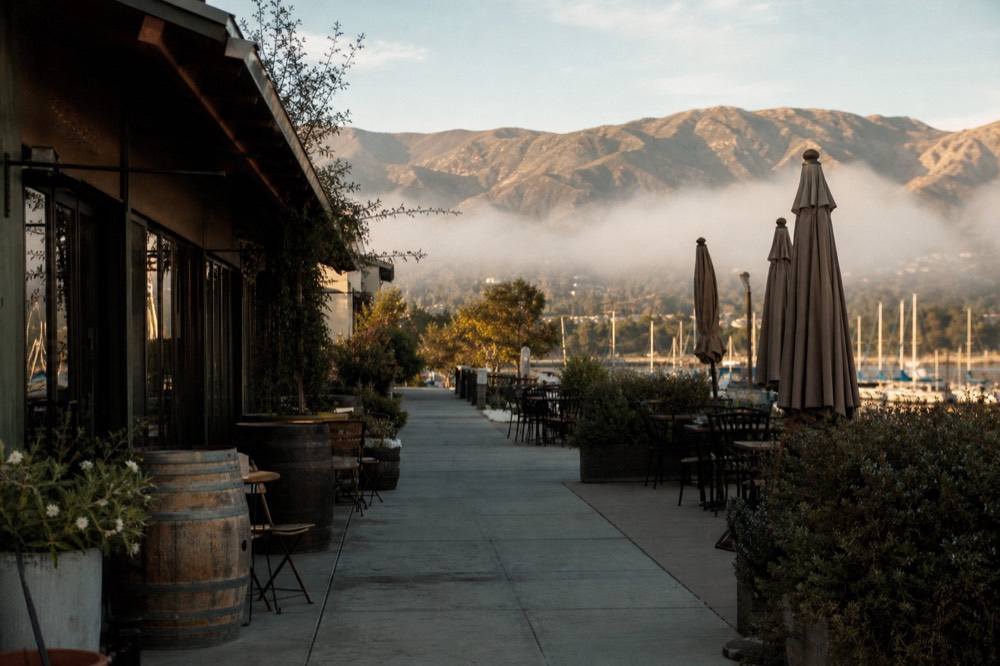
What the train cannot do is carry you to the vineyard estates, because those are inland and off the rail map. So the honest split is between the urban rooms you can reach by train and the valley estates you cannot. The table below shows exactly what the Amtrak line gets you to and where a tour has to take over. The walkable downtown scene is mapped stop by stop in our walk through the urban wine trail, and the district's history is covered in our post on why it is called the Funk Zone.
| Destination | Reachable by train? | How you actually get there |
|---|---|---|
| Funk Zone tasting rooms | Yes, short walk from the station | Amtrak Pacific Surfliner, then on foot |
| Downtown urban wine trail | Yes, walkable district | Train, then walk between rooms |
| Santa Ynez Valley estates | No | Guided van, shuttle or car over the pass |
| Solvang and Los Olivos towns | No direct rail | Guided tour or car, about 40 minutes |
| Remote hillside wineries | No | Guided tour with the driving handled |
If you are coming by train specifically to reach the valley, the shuttle is the piece that bridges the gap. It runs up from the city with the driving handled and the tastings paid at each door, which is the closest thing to a scheduled transit line into wine country that the region offers.
What is the closest thing to a wine train in Santa Barbara?
The closest equivalent is a guided valley day: a small-group van that carries you between three or four estates with the driving, reservations and often lunch handled, which is the wine-train experience minus the rails. A shared shuttle is the budget version, an e-bike day the active one, and a walkable Funk Zone tour the no-car city option.
If the appeal of a wine train is really the freedom to taste without driving and without planning, then Santa Barbara has that in several forms, just on wheels instead of tracks. A guided small-group day is the truest match: someone else drives the passes and the ranch roads, the reservations are held in advance, and on the picnic version a lunch comes packed along, so your only job is to taste and enjoy the view. That is the wine-train promise delivered by van.
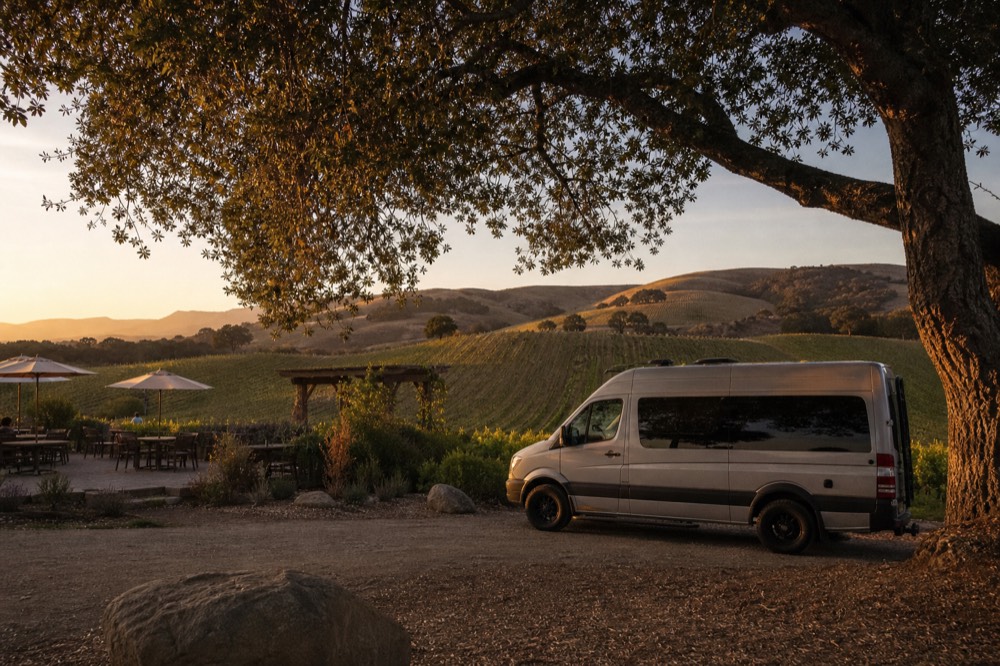
Different formats suit different travelers, and the range is wider than a single train ride could ever be. The table below lines up the real options against what a wine train would give you, so you can pick the one that matches the day you pictured. Prices and figures come from each live listing.
| Option | What it is | Based | Rating and price |
|---|---|---|---|
| Santa Ynez picnic day | Small-group van, 3 wineries, picnic lunch | Pickup toward the valley | 4.9 across over 110 reviews, price on the listing |
| Guided Santa Ynez day | Small-group van, small wineries, firm price | Pickup toward the valley | 4.8 across 28 reviews, from $239 per person |
| Santa Ynez wine shuttle | Shared shuttle up from the city, pay per door | Santa Barbara | From $139 per person, cheapest guided |
| Vineyard e-bike day | Ride between estates with tastings | Santa Ynez Valley | 5.0 across 131 reviews, price on the listing |
| Funk Zone walking tour | Walkable city tasting, no driving | Santa Barbara Funk Zone | From $135 per person |
That spread is the honest replacement for the train question, and it is a big part of how we think about the region at Santa Barbara Wine Tours: point you at the real, currently bookable day that gets you among the vines, not a novelty that does not run here. The picnic day is the one most people start with, since it comes closest to the all-handled ease a train promises.
How do you get from the city to the valley wineries?
By road, over a mountain pass, in about 40 to 50 minutes. Highway 154 over the San Marcos Pass is the shorter, scenic route; Highway 101 up the coast is a comparable, less direct alternative. Because the estates are dispersed and California's driving limit is 0.08 percent, a tasting day is the strong case for letting a guide or shuttle handle the drive.
The trip from the coast to wine country is short but real, and how you cover it shapes the whole day. Santa Barbara city sits about 35 miles from Los Olivos and 34 from Solvang, roughly 45 to 50 minutes either way. The prettier path is Highway 154 over the San Marcos Pass, a two-lane climb through the mountains with valley views opening on the far side. Highway 101 loops up the coast and is a similar distance but less direct. Either way, you are crossing a range, not strolling to a station.
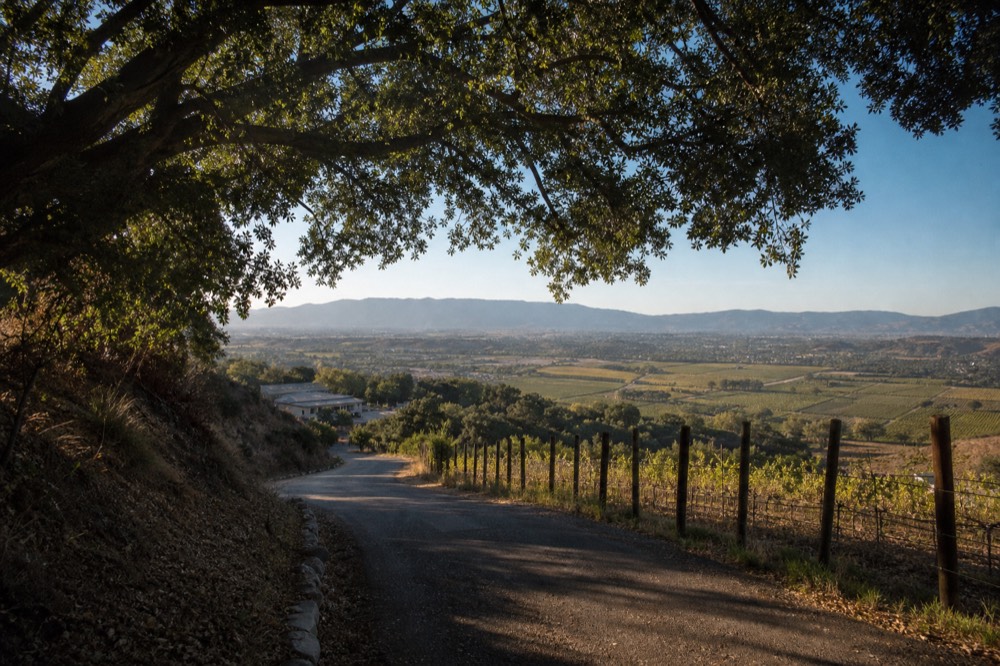
Once you are in the valley, the driving does not stop, because the wineries are spread across ranch roads with real distance between them. String four together and you are covering serious ground between pours, and California sets the driving limit at 0.08 percent under the state vehicle code, which a flight of four to six pours per room reaches quickly. That is the whole case for a guided day rather than a rental car. For the full breakdown of routes, drive times and the designated-driver logic, our guide to reaching the valley from Santa Barbara covers it, and our post on how far the wineries actually are puts numbers on every leg. If a fully handled valley day sounds right, you can check the dates and what it covers on the live listing.
Is the Funk Zone worth it if you arrive by train?
Yes. The Funk Zone is one of the easiest wine experiences in California to reach without a car, with around 20 tasting rooms in a walkable district steps from the Amtrak station and the waterfront. It is not the vineyard scenery of the valley, but for a car-free afternoon of tasting near the beach, arriving by train and walking the trail is a genuinely good plan.
For train travelers specifically, the Funk Zone is the payoff. Step off the Pacific Surfliner and you are within a short walk of a compact neighborhood packed with tasting rooms, cafes and the ocean, no rental car or designated driver required. The wine is trucked in from the inland vineyards you cannot see, but the pours are the real thing, the district has genuine character, and the whole afternoon runs on foot.
The one honest caveat is that the scene keeps shifting, so a room you read about may have moved or closed. The walkable trail runs around 20 rooms at any given time, mapped on the urban wine trail's own guide, and the district trades rooms in and out from year to year. For a car-free day it still beats almost anywhere, and if the valley towns tempt you afterward, our post on the cute wine towns near Santa Barbara covers what a night inland adds.
So the wine train stays a myth here, but the day it stands in for is very real, and often better. Whether you taste car-free in the Funk Zone off the train or ride a guided van up to the estates, the region is easy to do without your own wheels. The three valley days below give a clean spread, from the top-rated picnic day to the firm-priced guided tour and the cheapest guided shuttle up from the coast.
Common questions about a Santa Barbara wine train
Is there a wine train in Santa Barbara?
No. Santa Barbara has no dedicated wine-tasting train like the Napa Valley Wine Train. No rail line runs through the Santa Ynez Valley vineyards. The Amtrak Pacific Surfliner passes through the city and stops near the walkable Funk Zone tasting rooms, but it is a regular passenger service, not a wine excursion.
Why does Santa Barbara not have a wine train?
Geography rules it out. The vineyards sit inland in the Santa Ynez Valley, about 40 minutes over a mountain pass, and the estates are scattered across ranch roads rather than lined up along a rail corridor. Napa's wine train works because its wineries sit close along a single historic track, which Santa Barbara's wine country does not.
Can you reach Santa Barbara wine country by train?
Partly. The Amtrak Pacific Surfliner stops downtown a short walk from the Funk Zone, where around 20 tasting rooms sit in a walkable district, so you can taste car-free by train. But the inland valley vineyards are not rail-served, so reaching them still means a guided van, a shuttle or a car over the pass.
What is the closest thing to a wine train in Santa Barbara?
A guided small-group valley day is the closest match: a van carries you between three or four estates with the driving, reservations and often lunch handled, which is the wine-train experience without the rails. A shared shuttle is the budget version, an e-bike day the active one, and a walkable Funk Zone tour the no-car city option.
How do you get from Santa Barbara to the valley wineries?
By road over a mountain pass, about 40 to 50 minutes. Highway 154 over the San Marcos Pass is the shorter, scenic route, and Highway 101 up the coast is a comparable alternative. Because the estates are dispersed and California's driving limit is 0.08 percent, a guided tour or shuttle is the sensible way to cover it.